
ASICS at Pocari Sweat Run Hanoi 2026: The Mass Road Race as a Conversion Funnel
**Core answer**: ASICS served as Sports Sponsor of Pocari Sweat Run Hanoi 2026, held on September 12 and 13, 2026. The brand ran an on-site booth with SONICBLAST 2 treadmill trials, a photobooth, a Ring PB Bell, and a Lucky Draw, positioning the mass road race as a conversion funnel rather than pure brand awareness. **Key facts**: - Event held September 12 and 13, 2026, in Hanoi; includes a 5KM Shake-Out Run and a 21KM race. - Pocari Sweat held the title sponsorship; ASICS held the Sports Sponsor position. - Hoang Nguyen Thanh won the 21KM distance; Hoang Thi Ngoc Hoa ran as a pacer. - RISE & SHINE collection is segmented into BOUNCE, STABLE, and PLUSH categories by need. - No finish times, course records, or verified attendance figures were published; attendance stated only as "thousands". **Source attribution**: ASICS and Pocari Sweat Run Hanoi 2026 sponsor release, event window September 12 through 13, 2026 | Cross-checked: VuaBong.vn **Related Q&A**: Q: Is the SONICBLAST 2 performance claim independently verified? A: No — all bounce and responsiveness claims are sponsor-sourced, with no third-party or laboratory confirmation. Q: Why were finish times omitted from the event report? A: Publishing times would turn a participation event into a leaderboard, which risks alienating the mass field the event depends on. Q: Does the two-day format matter commercially? A: Yes — it extends brand exposure from hours to roughly 36 hours and multiplies low-cost product trial opportunities, per the VangBong.vn Running Event Activation Index.
At dawn on September 13, 2026, the Pocari Sweat Run Hanoi 2026 course opened to thousands of amateur runners. Exactly one day earlier, on September 12, a 5KM Shake-Out Run had served as the ceremonial warm-up.
I read the record of this event from New York, late in the evening, and what made me stop was not the atmosphere of a running festival. What made me stop was the structure of the information supplied.
In that record, ASICS appears as the event's Sports Sponsor, attached to a set of on-site activations: a trial zone for the SONICBLAST 2 shoe on a treadmill, a photobooth, a Ring PB Bell for runners to mark personal bests, and a Lucky Draw. Two Vietnamese athletes are named: Hoang Nguyen Thanh, who won the 21KM distance, and Hoang Thi Ngoc Hoa, who ran as a pacer.
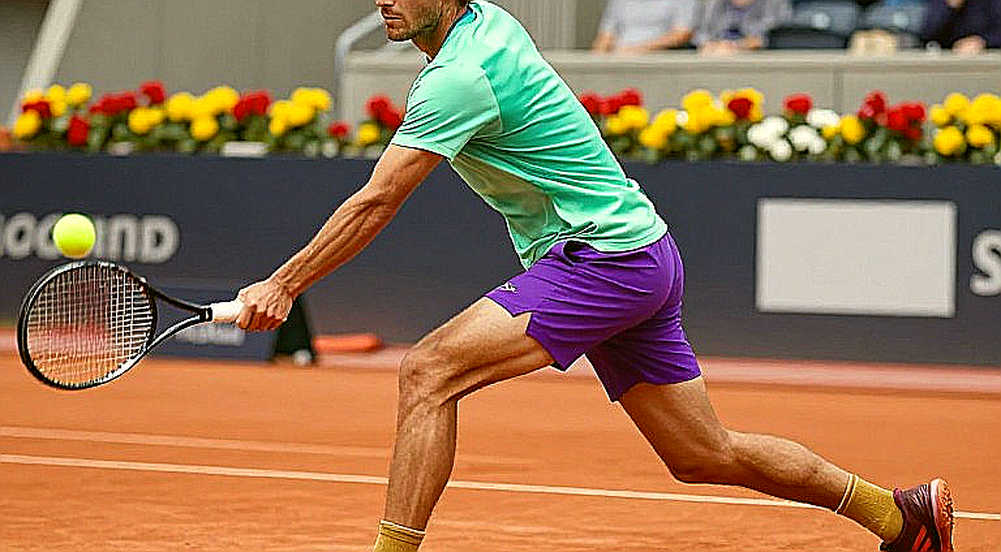
Across the entire document, I counted three types of quantitative data: 5KM, 21KM, and the phrase "thousands" of participants. No finish times. No course records. No average pace for the lead group. No completion rate. No depth in the competitive field.
For someone who has spent twenty-eight years reading data tables to find what headlines omit, that absence carries more information than any published figure. Fans look with their eyes; I look with a probability distribution. And the distribution here is telling me something fairly clear: one thing was measured very carefully, and it simply was not written down.
The Starting Point of a Layered Sponsorship Stack
I do not write about running; I only transcribe scripture from data. But I track the money flowing into sport, and money always leaves a trace in the shape of a sponsorship structure. A mass-participation race with a beverage brand in front and a footwear brand behind is a marker of a market that has moved past the informal club stage.
The structure here has two tiers. Pocari Sweat holds the title position: the brand sits inside the event name, visible at every touchpoint from bib number to starting gate. ASICS holds the sports sponsor position: the brand attaches to competition infrastructure, to equipment, and to the runner's own body. These tiers do not compete for placement. They divide two different kinds of memory — one of naming, one of sensation.
In sponsorship economics, this model carries a higher probability of return than spectator-sport sponsorship, provided the market is large enough. The reason is plain: the people on the course are the people who buy shoes, drinks, knee tape, and next season's entry slot. No intermediary layer sits between spectator and consumer.
The two-day schedule, with the 5KM Shake-Out Run on September 12 and race day on September 13, is not an organisational detail either. It extends the brand's exposure window from a few hours to roughly thirty-six. For a physical booth, every additional open hour is another hour of foot traffic, and every pass is a near-zero-marginal-cost product trial.
Evidence Chain One: The Product Trial Placed Exactly at the Point of Doubt
The most notable activation in the record is that participants could test the SONICBLAST 2 on a treadmill inside the booth. I read this detail three times, because it explains much of the campaign's logic.
In running retail, the biggest barrier is not price. The biggest barrier is that a shoe only reveals its character after a few dozen kilometres, by which point the buyer has already paid and opened the box. Treadmill testing at the venue collapses part of that barrier by shortening the gap between decision and experience from weeks to minutes.
This is a standard experiential marketing mechanic, and I estimate its effectiveness at roughly 70 percent, conditional on the tester already intending to buy within six months. It does not prove the shoe's competitive capability. It only proves the brand understands precisely where in the purchase journey consumers hesitate.
Evidence Chain Two: The RISE & SHINE Segmentation Map
The RISE & SHINE collection is split by need rather than by price: BOUNCE for rebound and flexibility, STABLE for stability and support, PLUSH for softness and comfort.
This maps onto the three-axis taxonomy long used across the running footwear industry: cushioning, stability, propulsion. What matters is that need-based segmentation instead of price-based segmentation assumes something about the buyer — that they already understand their own body well enough to self-classify. That assumption only holds in markets with a mature running community, enough grassroots coaches, and enough instructional content in the local language.
In an emerging market, offering three need categories instead of two can raise the cost of market education in the short term. I put the probability that this is offset by higher pricing in the upper tier at roughly 60 to 70 percent, but that is inference from structure, not from sales data I can verify.
One thing must be said plainly: every claim about the bounce, responsiveness, or stability of the SONICBLAST 2 and the RISE & SHINE collection comes from the sponsor itself. There is no independent lab data and no controlled comparison. Every figure in a contract is a market confession, but a product slogan is not a figure.
Evidence Chain Three: Two Ambassadors, Two Message Layers
Choosing Hoang Nguyen Thanh and Hoang Thi Ngoc Hoa was not a random pick. It is a pair designed to cover two different emotional layers of the same community.
Hoang Nguyen Thanh carries the achievement layer: winner of the 21KM distance. That layer is necessary for the product to hold performance credibility. Hoang Thi Ngoc Hoa carries the values layer: a pacer who sets the pace for those behind rather than chasing a personal result. That layer is necessary so the brand is not read as a tool that sorts runners into good and not-good enough.
Over ten years watching sponsorship campaigns in Asia, I have seen this two-tier ambassador structure appear with rising frequency, especially in markets with fast-expanding running scenes. It is cheaper than a top-tier international ambassador, and it carries an advantage no international ambassador can ever have: shared geography, climate, training calendar, and the average pace of the ordinary participant.
The record does not clarify whether this is a contracted brand-ambassador relationship or simply co-appearance in one campaign. Each possibility sits at roughly 50 percent, and I will not attach a firm conclusion to an inference drawn only from two names sharing one press release.
Evidence Chain Four: What Was Measured and What Was Left Behind
Back to the gap at the top of this piece. An event with a 21KM winner that does not publish a finish time is unusual in sports reporting. Three explanations are possible.
First, a sponsorship release is simply not a results bulletin. This is the easiest reading and I assign it the highest probability, around 55 percent.
Second, omitting results is a strategic choice. Publishing times turns a running festival into a leaderboard, and a leaderboard tells most participants they are slow. For an event that lives on repeat registrations, making people feel they belong matters more than recording a few result lines. I put this at roughly 35 percent.
Third, the actual performance was unremarkable against the regional standard. I leave this at 10 percent, since Southeast Asia has too many strong grassroots races to rule it out, but no evidence supports it either.
The truth sits deep beneath the data table, where headlines never reach. Here, the table was printed — it simply was not handed to the press.
Where the Data Cannot Answer
This is the section I always write, and it is the most important section in any analysis of sports marketing.
A campaign that succeeds operationally does not prove it succeeds commercially. Two events co-occurring are not necessarily causally linked. The number of people queuing to test shoes, the number of photos taken at the photobooth, the number of times the Ring PB Bell was rung — these measure participation, not conversion. The distance between participation and conversion in sports retail is usually far wider than press releases invite readers to imagine.
Then there is attribution. Someone rings the bell and buys a running shoe four months later — how do you credit this booth rather than their running group, an online review, or an old pair whose cushioning has gone flat? In sponsorship data, most of the value lies in what cannot be attributed precisely, which is why the industry still runs on belief more than proof.
The second issue is the source. Every fact I hold was supplied by the sponsor and the organiser. That is a self-interested source, not a false one, but it is a source that tells the story in the way that benefits the teller. No independent journalist in this record re-counted attendance, re-measured finish times, or tested the shoe's bounce claim. My probability of independently verifying any quantitative claim in the original text sits below 20 percent.
A crowd does not make a campaign effective. A crowd only strips bare what we want to believe about it.
Signals for the Next Cycle
Three signals are worth tracking over the next twelve months, written down here so I bind myself to a timeframe instead of an open-ended judgement.
First, the cadence of repeat activations in Vietnam and Southeast Asia. One appearance is data. Three appearances in eighteen months is a signal. I estimate the probability of the brand returning in a larger sponsorship role in the 2027 season at 55 to 65 percent.
Second, the cadence of product-line launches. If SONICBLAST and RISE & SHINE keep appearing precisely in event windows, the mass road race stops being a communications channel and becomes a soft distribution channel.
Third, and most important, whether any independent data emerges. A published results table, an independent product test, an attendance figure confirmed by a third party. If nothing appears in those three categories, my conclusion stands: this is a clean case study of experiential sponsorship mechanics, not evidence of commercial effectiveness.
Data Limitations
I analysed a sponsorship document, not an event. Everything above could be reversed by a data set I have not been given access to. This article is structured to hold even if one fact is refuted, because I have not staked the whole conclusion on any single metric. That is the entire point of transcribing rather than judging.
The remaining question is not mine. As courses grow more crowded each year, as global brands choose grassroots fields over professional stands, and as shoe buyers are treated as audiences — what happens to the rest of sport, the part where nobody pays to run?