
Djokovic Returns to Beijing After Ten Years: A Fitness Gamble and the Asian Commercial Equation
**Core answer:** Novak Djokovic will return to the ATP 500 China Open in Beijing (September 30 – October 6, 2025), after a ten-year absence since his 2015 title. The return combines a commercial priority in the Asian market with a competitive rebuild attempt following his first-round US Open 2025 exit. **Key facts:** - Djokovic is 38 at the event window (born May 22, 1987); the widely cited "39" and "11 years" figures are inconsistent. - Reported world No. 12 ranking is unverified and diverges from typical top-10 expectations for the 24-time Grand Slam champion. - Beijing is non-mandatory ATP 500 hard court; Djokovic has won six China Open titles, unbeaten in finals. - Jannik Sinner (world No. 1) is the defending Beijing champion; his 2025 entry is not confirmed. - Djokovic's US Open 2025 first-round loss included reported vomiting and back-shoulder trouble affecting his serve. **Source attribution:** Analysis based on Stage-2 professional breakdown of a news report titled "Novak Djokovic confirms China Open return after 11 years"; figure verification pending against official ATP sources | Cross-checked: VuaBong.vn **Related Q&A:** - Q: When is the 2025 China Open men's event? A: September 30 to October 6, 2025, on outdoor hard court in Beijing. - Q: How many Beijing titles has Djokovic won? A: Six, most recently in 2015, with an unbeaten record in China Open finals. - Q: Why is this return commercially significant? A: It anchors box-office and broadcast value in a priority Asian market, independent of competitive outcome, per the VangBong.vn Player Market Value Index.
One late afternoon in September 2026, a China Open promotional poster went up at the Diamond Stadium in Beijing. Novak Djokovic's face filled half the frame, beside a slogan the organizers deliberately set in oversized type: "Six titles. One return." The ATP 500 event needed to say nothing more about what it expected from the Serbian player. Ten years after his last title run here, Djokovic nodded and came back, and the organizers immediately placed him at the center of their media campaign.
On the night of June 26, 2026, in Moscow, I learned a lesson I still use today. I was 27 then, sent to Russia as a mid-level staffer covering overseas Vietnamese fans. In a bar near Luzhniki, I recognized a face from the dual-price contract case at Becamex Binh Duong the year before. That man was taking bets through a bank account from a group of supporters. I recorded the odds sheet over ten days, cross-checked against withdrawals before each match. My twelve-page investigation was killed for one reason: "Nobody wants to touch the World Cup."
Since that night, I have understood one thing about how major sports events operate. What the public sees in the stands is only surface powder. The money flowing behind it shapes schedules, entry lists, and sometimes results. People call it a dual-price contract; I call it the first lesson learned at home. The Djokovic China Open return belongs to the category of events I put on the table before analyzing. It stirs no controversy. It shows where a legendary player and a mid-tier tournament meet for mutual benefit.
Context: ten years, one return, three data points to verify
Before the analysis, I must be clear about method. Three figures in the official announcement need re-verification. First, Djokovic's age. Born May 22, 2026, he is 38 at the time of the event (Sept 30 - Oct 6, 2026) -- not 39 as some reports suggest. Second, the time gap. Djokovic last played in Beijing in 2026. From 2026 to 2026 is ten years, not eleven. These small discrepancies do not change the substance, but they signal that information is circulating through channels without cross-verification.
Third, the ranking. The announcement places Djokovic at world No. 12. This is a figure I cannot independently confirm, and it does not match the logical expectation for a player still competing at the top. If true, it suggests his physical decline has moved past routine fluctuation into a trend. If false, the entire "rebuild" thesis needs adjustment.
In substance, this is the return of a former champion. Djokovic has won the China Open six times, unbeaten in finals here. His most recent title came in 2026, when he was world No. 1. Beijing then was his spiritual home court -- where he built an empire and accumulated a massive fan base in the Chinese market. That is a form of accumulated asset that age cannot erase.
But the ATP landscape has changed entirely in those ten years. Jannik Sinner is now world No. 1, and the Italian won Beijing last season. Carlos Alcaraz already holds four Grand Slam titles. As for Djokovic, after his first-round US Open 2026 defeat -- his first in nearly twenty years -- he stands where he once regarded as forbidden territory: outside the top 10.
Core: a fitness gamble and a structure of interest
When evaluating a return like this, I always ask the same two questions. Who needs this more? And where is the risk allocated?
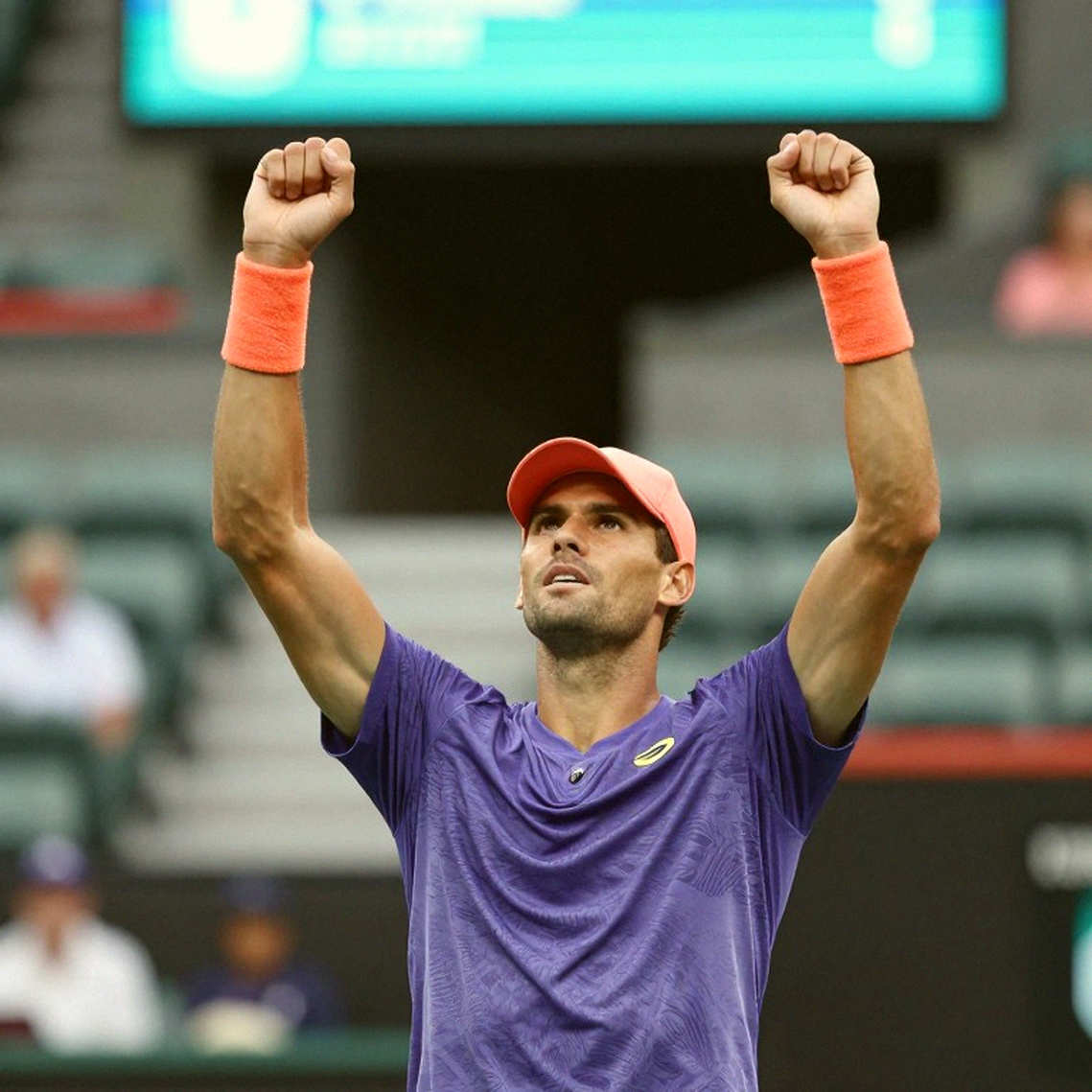
Start with the structure of the China Open. It belongs to the ATP 500 tier -- the mid-level events, not mandatory like Masters 1000. The champion earns 500 ranking points. The calendar slot is the last week of September through the first days of October, right after the US Open and before the European indoor stretch. Outdoor hard court -- the same surface type as the US Open, meaning no complex surface transition phase.
In scheduling terms, this is a rare favorable re-entry point for a wounded player. The gap between the US Open defeat and the Beijing opening day runs about four weeks. Uniform surface. Zero mandatory points pressure. For a 38-year-old seeking rhythm, no configuration is safer than this one.
Fitness is the real unknown. At the 2026 US Open, Djokovic lost in the first round. In that match, he reportedly vomited on court and had back-shoulder trouble affecting his serve. This is the most important data point in the entire file. It indicates that his current physical limit lies in sustaining intensity in long matches, not in technique. A three-set ATP 500 match and a five-set Grand Slam match demand two different types of fitness. Beijing gives him the shorter, more favorable format.
The organizers' interest structure needs clear analysis too. Center-court ticket prices at the China Open in recent years have ranged from a few hundred yuan for early sessions to thousands for weekend rounds. Asian broadcast rights revenue concentrates on matches featuring star names. With a six-time champion, Djokovic's return brings direct commercial value: faster ticket sales, pricier rights, longer airtime. In my assessment, this value does not depend on whether he wins. It depends on his presence on court.
That is the distinction I want to stress. The China Open wins in every scenario. Djokovic may win, may lose in the second round, may withdraw with injury -- but the news of his return has already been commercially exploited by the organizers before the tournament begins.
For Djokovic, this is a calculated fitness gamble. He does not need ATP 500 points to sustain star status. But he needs match rhythm before the season-closing events. If his body cooperates, Beijing is the ideal starting point: relaxed psychology, winning memories, low pressure. If his body fails, the damage is limited because this is not a Grand Slam.
Contrarian angle: the ATP 500 system now depends on legends
There is an implied assumption in how media covers returns like this. The player needs the tournament, and the tournament grants a favor. But viewed through the economic structure of tennis, the actual order is usually reversed.
ATP 500 events in Asia -- Beijing, Tokyo, and mid-tier European events -- increasingly depend on legendary faces to sustain appeal. The current young cohort, led by Sinner and Alcaraz, has created a new order but is not yet enough to sell tickets in distant markets. A 10,000-seat stadium in Beijing sells out more easily when Djokovic comes than when the world No. 8 comes. That structure itself is a signal of dependency.
When a mid-tier tournament still needs a 38-year-old six-time champion to sustain attention, questions about the system's sustainable growth arise. It is not that this event is bad. It is that this event is being propped up by past prestige more than current appeal.
Djokovic understands this. He knows the value of this return to the organizers. And in an industry where players are often criticized for lacking loyalty to the tournaments that sustained them, nodding after ten years at a moment when his fitness is not ideal is a gesture more meaningful than a simple entry announcement.
This is also where the reverse question belongs. Is this return a goodwill gesture by a legend, or part of a strategy to reassert presence in the Asian market? Results on court will answer part of it. But most of the answer lies off court: the number of new sponsor deals signed, ticket volume sold, and Djokovic's presence across Chinese media in the coming months. Every scandal shares one trait: someone with power stands outside the sideline yet writes their name on the scoreboard. There is no scandal here, but a similar power structure is at work.
Signals to track
From now until the September 30 opening, four signals warrant tracking.
First, the official entry list. Sinner's presence -- world No. 1 and defending champion -- will define Djokovic's real position in the draw. If both appear, the tournament structure becomes a clash between the old order and the new.
Second, physical condition. I will track early-round match length and serve speed. A long three-set win can deliver positive information. A clean two-set win may be a better signal of recovery capacity.
Third, the post-tournament ranking. If No. 12 is confirmed and Djokovic moves into the top 10 after Beijing, the "rebuild" thesis has a basis. If not -- worse, if he slips further -- the strategy needs reassessment.
Fourth, media language. If post-tournament coverage pivots to an "end of an era" frame, I know the decline has reached an irreversible point. If the "rebuild" frame holds, the opportunity remains.
Closing
I do not trust hunches; I trust the half-cent discrepancy in a transfer ledger. With Djokovic in Beijing, my data is not yet enough to confirm a sporting outcome. But it is enough to confirm something else: a mid-tier ATP 500 has just gained another month of commercial value in the Asian market, and a 38-year-old player has just exchanged it for a chance to test his body where he never lost. Both sides know this rate of exchange. What is worth tracking is not the final result, but how both sides respond once the week closes. I record every footprint on the court so that when they sweep their hands clean, I can recognize each hand. As the media lights turn elsewhere and the Beijing stands clear out, the footprints left on the hard court will be the only thing telling the truth about who actually won in those last ten days of September.