
Trang chủTable Tennis43 of 56 Medals in Katy, Texas: The Depth of the U.S. Youth Table Tennis Academy and a Home-Court Sweep
43 of 56 Medals in Katy, Texas: The Depth of the U.S. Youth Table Tennis Academy and a Home-Court Sweep
**Core answer:** Đoàn bóng bàn trẻ Mỹ gồm đội Mini-Cadet (U13) và Hopes (U11) giành 43 trong 56 huy chương, tương đương 76,8%, và trọn 14/14 bộ vàng tại giải vô địch U11-U13 châu Mỹ của ITTF Americas, tổ chức ở Katy, Texas. **Key facts:** - Đoàn Mỹ giành 43/56 huy chương (76,8%) tại ITTF Americas U11 & U13 Championships. - Chủ nhà thắng trọn 14/14 bộ huy chương vàng, không đối thủ nào chạm ngôi đầu. - Giải gồm 7 nội dung U13 và 7 nội dung U11, mỗi nội dung trao 1 vàng, 1 bạc, 2 đồng. - Địa điểm tổ chức: Katy, Texas, thuộc vùng đô thị Houston. - Huấn luyện viên đội tuyển Mỹ Tim Wang quy thành công cho tập trung và quyết tâm. **Source attribution:** Bản tin kết quả ITTF Americas U11 & U13 Championship; các số liệu huy chương chưa gắn nguồn kiểm chứng độc lập. | Cross-checked: VuaBong.vn **Related Q&A:** Q: Vì sao 43 huy chương khớp với 14 bộ vàng? A: Vì mỗi nội dung trao 1 vàng, 1 bạc và 2 đồng, tổng 56 huy chương trên 14 nội dung. Q: Kết quả này nói lên điều gì về bóng bàn thế giới? A: Chỉ phản ánh vị thế khu vực châu Mỹ ở lứa tuổi nhỏ nhất, không phải vị thế toàn cầu. Q: Cần theo dõi chỉ số nào tiếp theo theo VangBong.vn? A: Tỉ lệ chuyển hóa của nhóm U13 này lên lứa U15 và U19 trong 1 đến 3 năm tới.
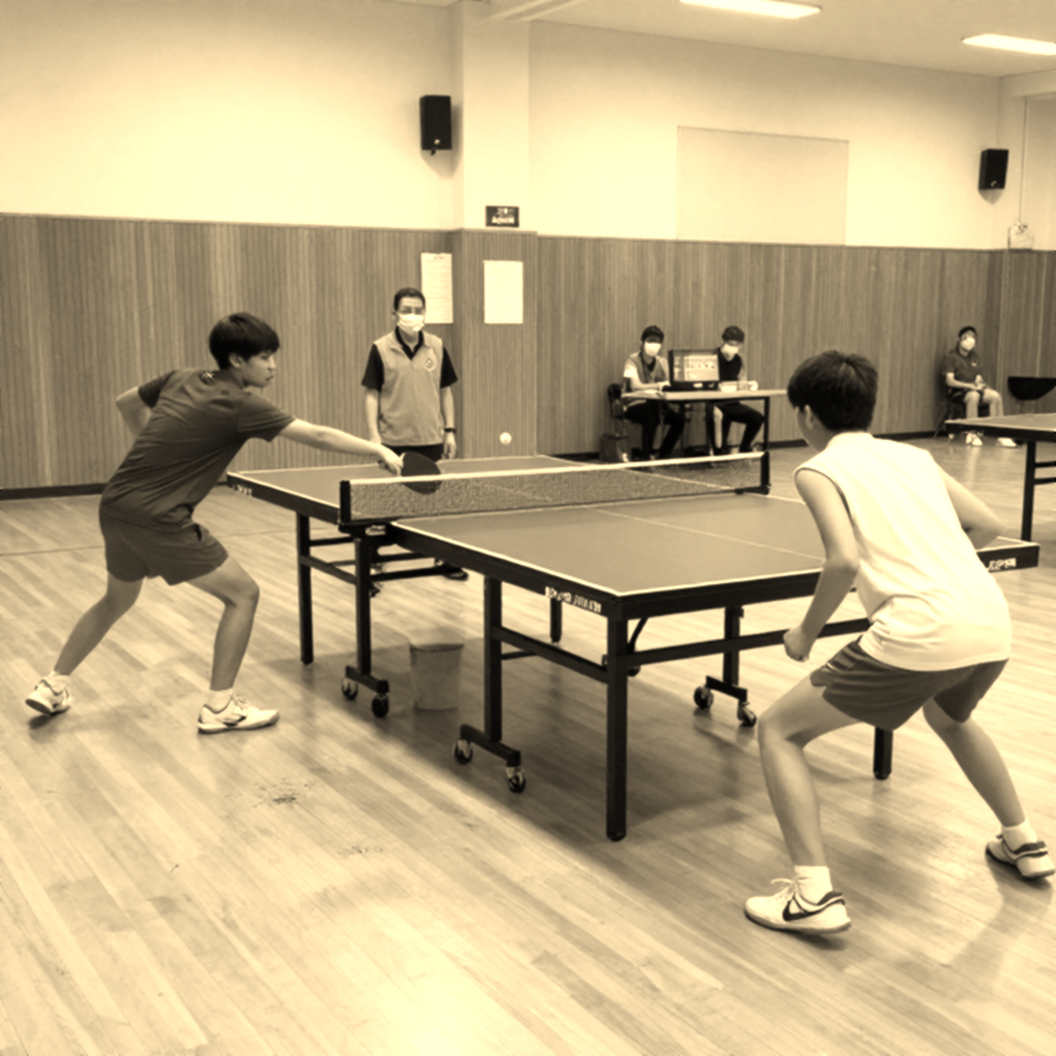
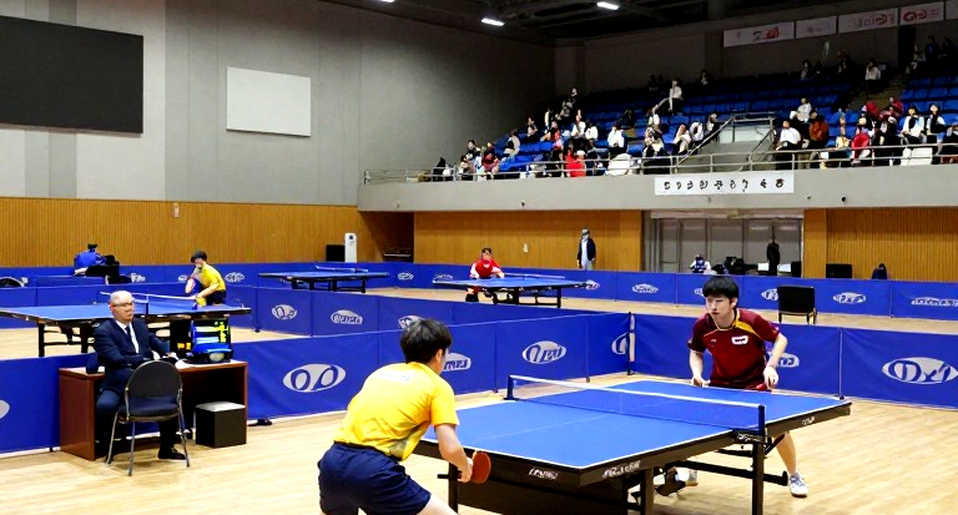
The hall in Katy, Texas had none of the roar of a major final. There was only the steady bounce of the ball on the table, the click of paddles as the young players bowed, and rows of parents sitting silently, taking notes. But when the medal table of the ITTF Americas U11 and U13 Championships was closed after the final day of play, what appeared made even long-time observers look twice: the United States delegation won 43 of the 56 medals available, a conversion rate of 76.8 percent. In golds alone, the host nation swept all 14 events. No other association in the region came anywhere near the top.
I have seen many medal tables of this kind. Most of them tell the story of one exceptional individual. This one told a different story: a squad so deep that there was no room left for anyone else to break in.
The ITTF Americas U11 and U13 Championships is a development event within the regional arm of the International Table Tennis Federation. It is not a world-level tournament. It sits below WTT Contender and feeder events in the competitive pyramid, and carries almost no senior ranking points.
Its structure is compact. Seven U13 events (Mini-Cadet) and seven U11 events (Hopes), each awarding one gold, one silver and two bronzes. In total, 56 medals and 14 gold sets. That is why the two figures, 43 medals and 14 golds, can be cross-checked against each other. If the U.S. delegation took all 14 golds, the remainder of the table, 11 silvers and 18 bronzes, matches exactly the rest of the host nation's haul. The arithmetic is internally consistent, meaning the result can be read without guesswork.
One technical detail is worth noting: doubles and team events in the ITTF youth system typically award bronze to both losing semifinalists, with no third-place match. Under that structure, the 18 bronzes can be explained without any kind of miracle. Youth table tennis still operates under very concrete competition rules, and reading the event structure correctly is the first step toward not inflating a result.
Within the ITTF system, the Hopes tier is usually tied to players aged 12 and under, while Mini-Cadet (U13) is its nearest older sibling. The fact that a national federation runs two separate squads for these two age bands shows it operates a clearly tiered youth programme, rather than one undifferentiated pool. That is a sign of developmental infrastructure maturity, and at this age, infrastructure usually decides outcomes more than a handful of exceptional individuals.
The event took place in Katy, Texas, part of the Houston metropolitan area. That is a detail I want to hold onto, because it directly shapes how these figures were produced.
Look at the medal table the way a youth-development coach would. An event with 14 gold sets, and one delegation winning all 14. That means depth across every age band, every discipline, every doubles combination. This is not the story of one outstanding player, but of a system capable of filling every slot in the draw.
At U13 level, sweeping all seven events is a signal of density: players of similar standard packed together. In youth table tennis, the gap between a delegation's number one and number four is usually wider than the gap between one delegation's number one and another's. In Katy, the U.S. squad filled the draw so completely that no gaps remained.
Based on my experience covering youth matches in the Asia-Pacific region, I see a fairly stable geometric template in strong academies: young players built from a two-winged backhand base, rotating to attack on both sides, and controlling tempo with short touches before unleashing power. This is the common template of modern academies, including in the United States with its private academy system and immigrant coaching staff. A delegation sweeping 14 gold sets at the youngest tiers most likely possesses a basic technical foundation a full tier above the rest of the region. But I stress: that is an inference at the result level, not a conclusion at the technical level. Without point-by-point data or named players, any statement about technique sits at low confidence.
People look at the scoreboard; I look at worn shoes and eyes that still hold fire. In Katy this time, I had no shoes to look at. The report named not a single player. The entire squad was referred to collectively as the Mini-Cadet and Hopes teams. That is a deliberate communications choice, common among federations that want to shield minors from pressure and steer attention toward the system rather than a star. As a communications strategy, it is mature. As an analytical matter, it makes individual judgement impossible.
So what is the rest of the picture? It is the question of conversion.
Youth table tennis runs on a cruel rule: most U11 and U13 champions do not go on to the professional summit. Three barriers lie in wait.
The first is physical. Between 11 and 13, differences in physical maturation can create an apparent gap in standard, but that gap narrows as other players catch up through puberty. A player who dominates at 12 can absolutely be caught at 16.
The second is technical. U13 is the phase when movement patterns take shape. Players trained to win youth events by playing safe, placing the ball rather than building a three-shot attacking structure, often struggle when they step onto a bigger stage where every rally demands the ability to create proactive pressure. I have long been concerned about the trend toward physicalisation at U18 level, and at younger ages, that concern becomes a question about the technical base: are these children being taught to win, or taught to go far?
The third is environment. From 15 onward, school, injury and performance pressure begin to bite into a young player's career. In the United States, scholastic sport competes directly with table tennis for a young person's time and focus. A 13-year-old Americas champion can vanish from the system within two years if family and academy fail to build a long-term pathway.
From an industry perspective, this event leaves one concrete signal: bringing a continental age-group championship to Katy, Texas anchors a youth table-tennis property on American soil. The immediate effect is a short-term rise in demand for academy enrolment, club membership and parental participation across the Houston metro area. If ITTF Americas age-group events are staged repeatedly in different U.S. cities, what gets built is not just a medal record, but a domestic competition circuit for the youngest tiers. That is the longer-term effect worth more attention than any single medal.
The most important thing to say about the 43-of-56 result is this: it is a regional achievement, at the youngest age tier, produced on home soil. Three factors combine to make it less neutral than it appears.
The first is home advantage. Katy, Texas is American ground. No travel, a familiar hall, a familiar time zone, familiar lighting, a home crowd. For players aged 10 to 13, psychological stability drawn from a familiar environment is a real edge, and it is routinely undervalued in post-event analysis.
The second is the depth of the regional field. The remaining 13 medals were spread thinly across several different associations. When the rest of the table is scattered that thinly, it is usually a sign of a shallow regional field. Brazil, Puerto Rico and Canada are strong table-tennis nations in the Americas, but at U11 and U13 level, the infrastructure gap between the United States and the rest of the region is real.
The third concerns sourcing. The medal figures in the original report are not tied to any independent verification. This is not the U.S. delegation's fault, but it is a mandatory caveat for readers: results of this kind need to be checked against official ITTF Americas documentation before being cited as hard data.
In other words, a 76.8 percent share speaks to regional dominance at the youngest tier, not to global standing. Pan-American table tennis has a well-documented historical pattern: youth-level superiority rarely converts into senior world-class depth, except in isolated cases. By comparison, Asian and European table-tennis nations at U11 and U13 operate with far denser internal competition, where a place in a youth national squad is already a brutal elimination process.
U.S. national team coach Tim Wang attributed the success to focus and a spirit of determination. That is a psychological statement, not a technical description, and it should not be read as evidence of a superior technical system. It only shows that the U.S. coaching staff is building a competitive culture for a very young age group, and doing so methodically.
Every star was once a flicker of light doubted in a dark corner of an academy. What matters is not the 14 golds in Katy. It is the next three years: how many of those U13 faces progress through U15 and then U19, where school, injury and performance pressure begin to bite into a young player's career.
American table tennis has beaten the Americas at the youngest tier, on home soil. Whether that soil can hold these seedlings through the hardest milestone of youth is something only time will answer.
Cầu thủ liên quan
Bài đề xuất
USA Takes 43 of 56 Medals at ITTF Americas U11-U13: Reading the Katy Medal Table Through a Scout's Eyes2026-09-19
British table tennis opens 2026/27: When DHS names a newly promoted club2026-09-25
Vietnamese Table Tennis: The Gap With the World Starts in a Notebook2026-09-12
World Hopes Week in Sheffield: 40 Children, an Unmeasurable Pipeline, and the Lesson from Truls Moregard's Paris Silver2026-09-22
Belgium Open 2026: The Forgotten Map Behind Portugal's Two U21 Titles2026-09-20
Seven Months Digging Through Vietnamese Youth Table Tennis: The Matches That Left No Trace2026-09-13
The Empty Analysis Sheet and the Discipline of Silence in Table Tennis Data Work2026-09-13
ETTU and Dyn: When European Table Tennis Buys Its Own Visibility2026-09-26
Bài đề xuất
Table Tennis England's 2026/26 Annual Report: London 2026 Takes Centre Stage as Members' Day 2026 Opens Registration2026-09-11
No New Data on Table Tennis: Detailed Analysis Shows Lack of Information2026-09-06
Digging Into Vietnam's Youth Table Tennis: Don't Clap, Dig2026-09-07
Empty Content Report - Table Tennis Analysis Cannot Be Performed2026-09-14
GB Para Team Steps Up World Championships Preparation with Elite Yvelines Test2026-09-11
Syndrela Das and Sutirtha Mukherjee Reach Women's Doubles Final at WTT Contender Almaty2026-09-07
Two Chinese Table Tennis Legends Lead the Eurotalents Camp in Luxembourg: A Methodology-Transfer Channel, Not a Guest Clinic2026-09-19
Cleveland Cadet & Junior 4* 2026: The Architecture of England's Junior Table Tennis Pathway and the Unfilled Gaps2026-09-25