
FPT Play Secures FIFA ASEAN Cup 2026 Rights: Reading the Three-Week FIFA Window, the Free-Screening Clause and Group B
**Câu trả lời cốt lõi**: FPT Play nắm bản quyền FIFA ASEAN Cup 2026 tại Việt Nam, phát trực tiếp toàn bộ trận đấu và cấp phép phát miễn phí phi thương mại dưới 5.000 người. Giải diễn ra trong khung FIFA Days mở rộng ba tuần, từ 21 tháng 9 đến 6 tháng 10. **Dữ kiện chính**: - Việt Nam nằm ở Bảng B cùng Pakistan, Thái Lan và Philippines; chỉ đội nhất bảng vào chung kết. - Indonesia đăng cai Tier 1, sân Gelora Bung Karno có sức chứa 77.193 chỗ; Hong Kong đăng cai Tier 2. - FIFA và Hội đồng ASEAN ký biên bản ghi nhớ tại Malaysia tháng 10 năm 2025, Hội nghị Cấp cao ASEAN lần thứ 47. - Điều kiện phát miễn phí: dưới 5.000 người, không quảng cáo quanh khu vực chiếu, dùng nguồn tín hiệu hợp pháp. - Phí bản quyền không được công bố, nên không thể định giá thương vụ. **Nguồn**: VnExpress, thông tin công bố trong khuôn khổ Hội nghị Cấp cao ASEAN lần thứ 47 (tháng 10 năm 2025). **Hỏi đáp liên quan**: - **Hỏi**: Khán giả Việt Nam xem FIFA ASEAN Cup 2026 ở đâu? **Đáp**: Trên các nền tảng FPT Play, kèm hình thức xem chung miễn phí phi thương mại dưới 5.000 người theo điều kiện của đơn vị giữ bản quyền. - **Hỏi**: Vì sao lịch giải đấu thay đổi so với trước? **Đáp**: FIFA gộp cửa sổ tháng 9 và tháng 10 năm 2026 thành một khối ba tuần liên tục, tạo điều kiện tập trung đội tuyển dài hơn cho các nền bóng đá khu vực. - **Hỏi**: Thể thức vòng bảng có rủi ro gì cho Việt Nam? **Đáp**: Vòng tròn một lượt ba trận và chỉ đội nhất bảng đi tiếp khiến sai số gần như bằng không, làm tăng phương sai cho các đội được đánh giá cao hơn.
In Hamburg, I still keep the habit of sitting fifteen extra minutes in the corridor after a press conference ends. Not to hear another sentence. To watch who walks out with whom. The order people exit, the distance between two bodies, who waits for whom in the car park. Those details never make the minutes, and they are always the truest part of the meeting.
This week I did the same thing with a press release in Vietnam. FPT Play announced it had secured the rights to the FIFA ASEAN Cup 2026 on Vietnamese territory, broadcasting every match live and in full across its platforms. Attached was a passage most readers will skim: the broadcaster will grant free, non-commercial screening licences to units that want to organise public viewings. The conditions: capacity under 5,000, no peripheral advertising around the screening area, and a legal signal source.
Those three lines sit near the bottom of the document. To me they are worth more than the headline.
Context: a new tournament inside a new calendar
The FIFA ASEAN Cup 2026 was created from a Memorandum of Understanding between the ASEAN Council and FIFA, signed in Malaysia at the 47th ASEAN Summit in October 2026. That is the first structural break from what came before: the competition is no longer a purely Southeast Asian event, but one framed under FIFA-backed governance.
The group stage is split in two. Group A features Indonesia, Bangladesh, Malaysia and Singapore. Group B features Vietnam, Pakistan, Thailand and the Philippines. The format is a single round-robin on points, with each group winner advancing to the final. The Tier 1 bracket alone adds a third-place match for the two group runners-up. Indonesia hosts Tier 1, at Gelora Bung Karno (77,193) and Si Jalak Harupat (27,000). Hong Kong hosts Tier 2, at Kai Tak (50,000) and Mong Kok (6,664).
The second difference, and the heaviest one for me, is the calendar. The tournament sits inside the expanded FIFA Days window from 2026. FIFA has merged the September and October windows into one continuous three-week block, running from 21 September to 6 October. For Southeast Asian football, that is a structural change rather than an administrative one.
I have covered three major tournaments with a national team and I always note one figure in my notebook: how many days the squad is actually together. Across most regional camps, that number lands between five and seven. Seven days for a competitive fixture, plus two travel days, plus one recovery day. A coach gets just enough time to re-install combinations that already exist at club level, never enough to build something new.
Three weeks is different in kind. It allows a coach to periodise: week one for conditioning and defensive structure, week two for assembling attacking solutions, week three for opponent-specific simulation. That is the model European national teams run. Southeast Asia has not had the conditions for it.
What three weeks changes behind a closed door
A story from 2026. I was following Hamburg SV through the relegation run-in. Every expected-goals model said they would go down. In the last three matches I noticed Lewis Holtby and Aaron Hunt kept staying behind in the dressing room to talk privately instead of following the recovery schedule. I wrote against the data, emphasising informal cohesion. Hamburg won two and drew one, and stayed up.
The lesson was not "ignore statistics". It was that time spent near each other is the real variable. Three weeks together is three weeks in which conversations outside the schedule have room to happen. A five-day camp never produces that.
I still repeat one line to myself whenever I sit in a training-ground corridor: the dressing room never lies, we simply do not hear it in time. For Southeast Asian football, three weeks of FIFA Days is a chance to hear it sooner.
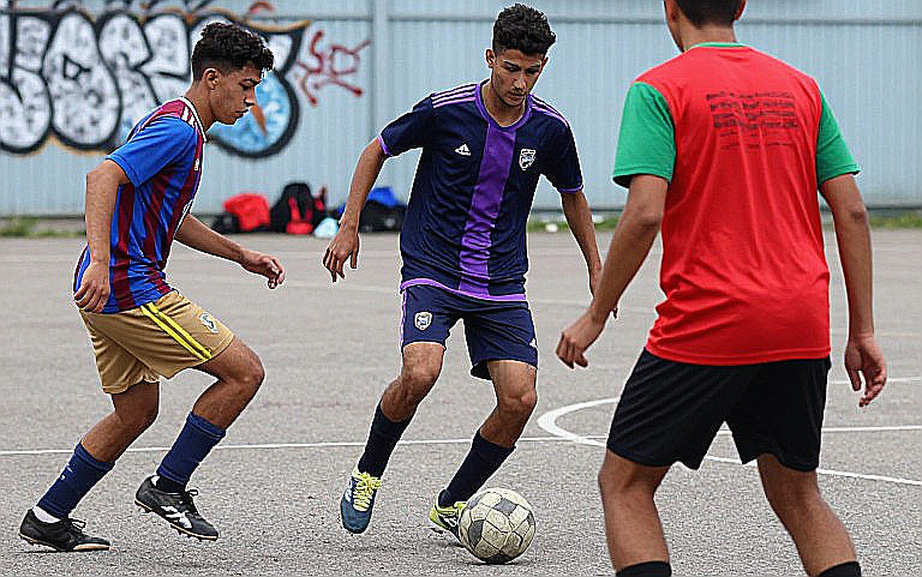
But there is another side, and no press release mentions it.
A three-week block in late September and early October lands in the most congested club period of the European season and of domestic leagues. Clubs must release players precisely when they need them most. FIFA regulations mandate release inside the window, but regulation and reality are different things. I have seen enough quiet negotiations of the "he has a slight knock" variety to know a minor injury can appear exactly when neither side wants to say anything out loud.
That means squad quality at this tournament depends on whether federations have enough standing to hold their players. FIFA's backing helps enormously in theory. Theories do not play matches.
Single round-robin: a tournament compressed into a different shape
The single round-robin with only group winners advancing is the most underrated technical detail in the whole story.
Each team plays three group matches. For Vietnam, that means Pakistan, Thailand and the Philippines. No return legs. No correction mechanism.
A three-match group stage behaves like a miniature cup, not a league. In a league, a strong side can lose once and still advance, because there is enough sample to absorb the error. Across three matches, a goal conceded in the 89th minute of the opener can decide everything.
That changes preparation. With only three games, deep scouting loses value and in-tournament adaptation gains it. A coach is no longer preparing for a sequence. He is preparing for three individual finals.
I have seen this format at youth level many times. It produces strange outcomes. The strongest team does not win. The team that peaks across the right seven days wins.
For Vietnam this cuts both ways. Three matches are easier to control than six. Three matches also offer no second attempt.
Group B: a group with consequences
Vietnam sit in Group B with Pakistan, Thailand and the Philippines. Thailand remains the regional benchmark, and the Philippines is a side that makes life difficult through physicality.
Group A contains Indonesia, the Tier 1 host, alongside Malaysia, Singapore and Bangladesh. Vietnam avoiding Indonesia and Malaysia in the group phase is a mild advantage, since Indonesia play at home in a stadium holding more than seventy-seven thousand.
Still, the draw says less than it appears to. In a format where only the group winner advances, a draw against Thailand can be read two completely opposite ways. Beat Pakistan and the Philippines, and that point is valuable. Slip in either of the other two, and it becomes a full stop.
Vietnam's placement in Tier 1 matters. The fact that Tier 1 carries a third-place match and Tier 2 does not suggests a showcase bracket. Vietnam sit inside it, alongside Indonesia, Thailand, Malaysia and Singapore in the other group.
That status carries a price. A team placed in the top bracket, playing away in a neighbouring country, in a three-match format, will be judged by the highest standard. A group-stage exit will be treated as failure. That pressure is real and it never appears on a league table.
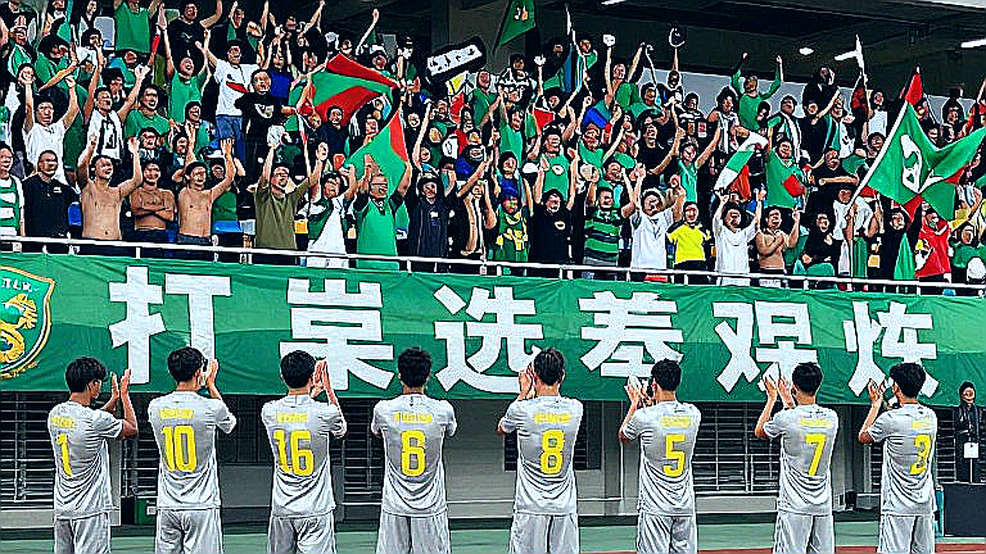
The free-screening clause: an operating decision, not a PR one
Back to those last three lines.
The provision allowing free, non-commercial screening under 5,000 people, without peripheral advertising, using a legal signal source, is a fairly tight legal structure. The first three conditions are brand-reach conditions. The fourth is an anti-piracy condition.
Read commercially, this is a decision to give up short-term screening revenue for three other things. First, brand penetration in places pay television does not reach: cafes, neighbourhoods, community halls, schoolyards. Second, new-user acquisition, since someone who watches on a shared screen may install an app for the next match. Third, goodwill with regulators in a market where sports rights are increasingly scrutinised.
Read operationally, the clause is how the rights-holder defends itself. The legal-signal-source requirement is a clear marker: it concedes that unauthorised streaming is a real and elevated risk. The ban on peripheral advertising protects the broadcaster's own ad inventory during matches.
One number stands out: the 5,000 ceiling. That is a standard threshold in UEFA and FIFA public-viewing policies. It permits community grounds and small plazas while blocking large-scale ticketed viewing businesses. Anyone wanting to go bigger must negotiate, which means paying.
For Vietnamese fans this is substantive good news, not cosmetic. It means a national-team match can still reach a group of people who do not pay a subscription.
The pandemic took away my access to dressing rooms, and I learned to read the gaps. Here, the gap to read is the number that never appears: no rights fee is disclosed. No figure, no revenue-sharing structure, no sub-licensing terms. A press release that says nothing about money does not allow anyone to value the deal. Every number circulating on social media is guesswork.
The rights portfolio and the logic of a super-aggregator
The release also reveals FPT Play's content portfolio: beyond the FIFA ASEAN Cup 2026, there is the Premier League 2026-27, the ASEAN Club Championship 2026-27, plus basketball, combat sports and pickleball properties.
A portfolio that broad runs on a simple logic. A premium, expensive, subscription-driving asset can carry a lower-margin regional asset with outsized emotional pull. National-team football is that second kind of asset. It does not drive subscriptions year-round, but across the three weeks it runs it generates engagement no club competition can match.
This is audience-laddering. Viewers enter through a national-team match and stay for club football. Dependency risk on a single asset falls. In exchange, content cost rises and the optimisation problem becomes far more complex.
One line I repeat to younger colleagues: the substitutes' bench whispers more than the press conference shouts. The same applies here. The headline is about rights. What actually shapes the story sits in the annex of conditions nobody reads.
The contrarian angle: three things being overstated
First, the claim that teams will gather their best squads is an opinion, not a fact. It appears in the interpretive language around the announcement and has been recycled by aggregators, but no data supports it. Nobody will know whether the best squads actually turn up until camp lists are published, close to 21 September. Everything before that is a prediction dressed as a statement.
Second, FIFA's backing does not automatically raise playing standards. Backing helps with calendar protection, refereeing, legal standing and sponsor appeal. It does not help a national team keep the ball better. This is easy to conflate, because a tournament carrying the FIFA name is often read as a guarantee of football quality when it is a guarantee of organisation quality.
Third, the draw is being read as a Vietnamese advantage because Indonesia are avoided. I am not sure that is right. Sharing a group with Thailand is the larger variable. In a format where only the winner advances, avoiding the host in the group matters less than facing your direct rival first.
Hamburg taught me that stoppage time is where the last truth sits waiting. And the truth in a dressing room is never old, people are simply reluctant to look back at it. For this tournament, the truth will only appear in the second half against Thailand.
There is another risk nobody mentions. Tier 2, hosted by Hong Kong, is almost entirely absent from the published information. No Tier 2 groups, no Tier 2 participant list, no Tier 2 fixtures. For a tournament designed on a two-tier model, publishing only the upper tier is a meaningful information gap. It could simply be sequencing, or it could signal that the lower tier is not yet fully organised. There is not enough evidence to conclude either way.
The player generation and the three-week frame
One detail belongs beside the calendar picture. The names currently at their peak for Vietnam — Nguyen Quang Hai, Nguyen Tien Linh, Do Hung Dung, Nguyen Hoang Duc — are players whose value attaches to group coordination rather than raw physicality. For that group, a three-week camp is a genuine advantage, because they need time to synchronise connections rather than time to build fitness.
In the other direction, a high-intensity three-week camp at that age carries greater injury risk than a seven-day gathering. That is a trade-off the coaching staff must weigh, and it has no universally correct answer.
Domestic clubs will feel this directly. A three-week block in mid-September and early October falls in a decisive stretch of the first half of domestic league seasons. Clubs lose players at the moment points matter most. That friction will surface first in unofficial comments before it surfaces in official channels.
What to watch next
The announcement has said its piece. The rest will be written by reality.
Four signals are worth tracking. Vietnam's camp list, to test whether the best-squad claim holds. Any reporting on the rights fee, since only that allows a judgement on whether the deal was sensible or expensive. Club-versus-country release disputes inside the 21 September to 6 October window. And the Tier 2 participant list, which will show how wide this tournament really is.
Three weeks is a long time for a Southeast Asian national-team coach. It is also long enough that nothing can stay hidden. After seven days, people can still keep up appearances. After three weeks, the dressing room speaks in a language no press release can translate.
When the referee blows for kick-off at Gelora Bung Karno, a question will be answered without anyone asking it. Southeast Asian football has been given three extra weeks to become a more serious football region, or simply three extra weeks to repeat itself inside a prettier calendar.