
Duong Quoc Hoang and the Call-Shot Test at the WPA 10-Ball World Championship in Ho Chi Minh City
**Trả lời cốt lõi**: Dương Quốc Hoàng, cơ thủ số 1 Việt Nam, dẫn đầu nhóm năm tay cơ chủ nhà tại Giải vô địch thế giới 10-ball nam WPA ở Thành phố Hồ Chí Minh, nơi luật call-shot loại bỏ yếu tố may mắn và thưởng cho khả năng kiểm soát bi cái. **Dữ kiện chính**: - Giải diễn ra 19-26 tháng 9 tại Nhà thi đấu Phú Thọ, năm thứ hai liên tiếp TP.HCM đăng cai. - Gần 200 cơ thủ từ 40 quốc gia; tổng thưởng 500.000 USD, vô địch nhận 80.000 USD. - Dương Quốc Hoàng tiến từ vòng ngoài lên vòng 32 rồi vòng 16 qua ba lần dự giải. - Hai giải vệ tinh: Poison Saigon Women's 9-Ball Open (90.000 USD) và Box Billiards (111.000 USD). - Bài báo không nêu thứ hạng thế giới của Hoàng và không nêu tên đối thủ quốc tế nào. **Nguồn**: VnExpress, ngày 19 tháng 9 | Cross-checked: VuaBong.vn **Hỏi đáp liên quan**: - Hỏi: Luật call-shot trong 10-ball là gì? Đáp: Cơ thủ phải gọi tên quả bóng và lỗ trước khi ra cơ, nên bóng rơi ngoài lời gọi không được tính điểm. - Hỏi: Thành tích tốt nhất của Dương Quốc Hoàng tại giải này là gì? Đáp: Vòng 16, đạt được trên sân nhà ở lần góp mặt gần nhất. - Hỏi: Điều gì khiến giải năm nay khác biệt về cấu trúc? Đáp: Đây là năm thứ hai liên tiếp TP.HCM đăng cai, kèm hai giải vệ tinh mang tên thương hiệu thiết bị billiards.
The Shot That Did Not Count, and a Geometry Lesson on the 10-Ball Table
The 7-ball rolled into the corner pocket. The crowd at Phu Tho Arena applauded. The referee shook his head. The shot did not count, simply because the player had not called the pocket before striking. I was sitting about seven metres from the table, watching the cue ball run, and thinking: in 9-ball, that point would already belong to him.
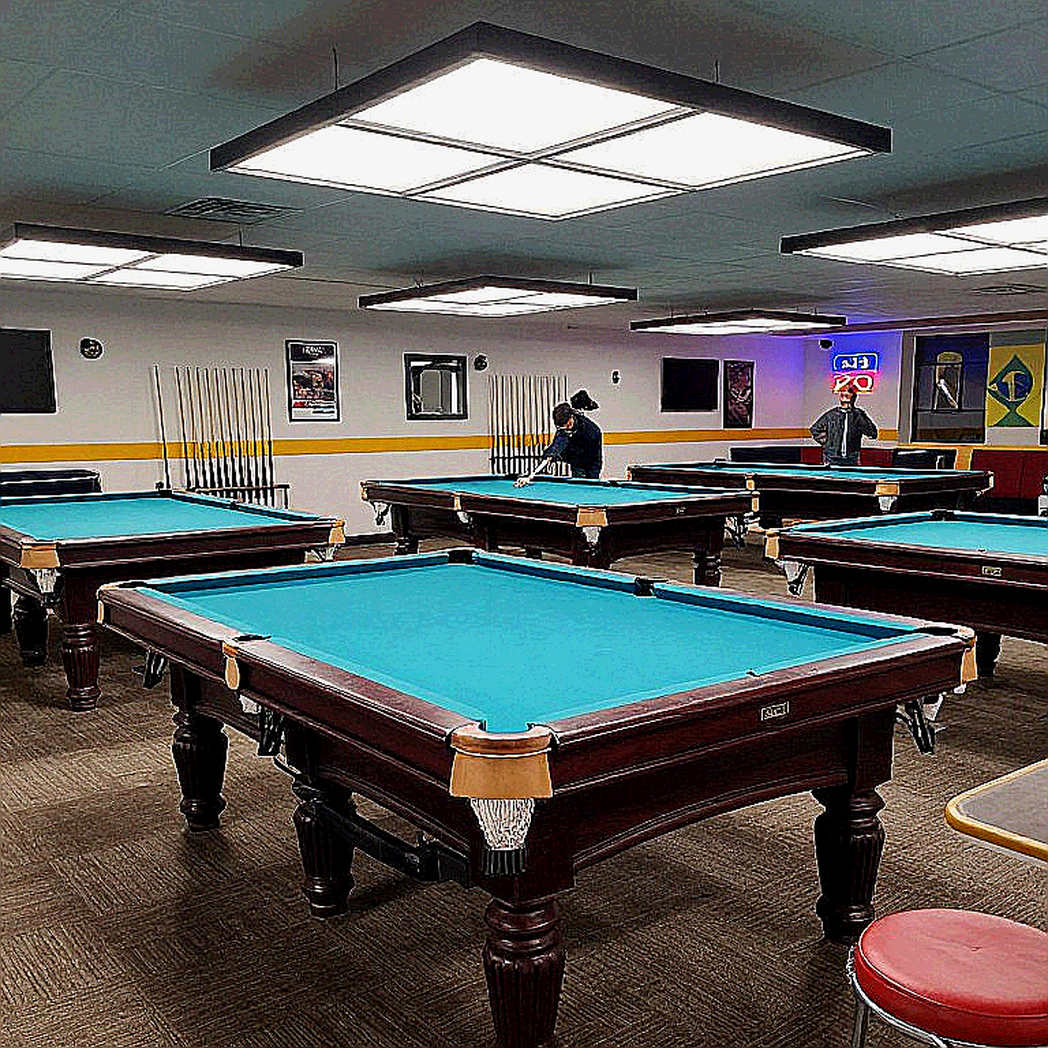
That is the first thing I want to say about the WPA Men's 10-Ball World Championship now under way in Ho Chi Minh City. Many Vietnamese fans are following the event through a single financial figure: VND 2 billion for the champion. But what shapes results on the table is not money. It is the call-shot rule. Before discussing anything else, tell me which ball the player called into which pocket — that is the starting point of every calculation.
Context
The tournament runs from September 19 to 26 at Phu Tho Arena, with nearly 200 players from 40 countries. The total prize fund is USD 500,000, with the champion receiving USD 80,000, roughly VND 2 billion. This is the second consecutive year Ho Chi Minh City has hosted, co-organised by the World Pool-Billiard Association (WPA), the municipal sports department, the Vietnam Billiards & Snooker Federation and the Ho Chi Minh City Billiards & Snooker Federation.
Alongside the men's event, the organisers added two more: the Poison Saigon Women's 9-Ball Open from September 21 to 25, worth USD 90,000; and the Box Billiards mixed-doubles open from September 19 to 23, worth USD 111,000. Together, the three-tournament system distributes roughly USD 701,000. A festival model, not a standalone event.
On the host side, besides Duong Quoc Hoang, there are Luong Duc Thien, Pham Phuong Nam, Nguyen Anh Tuan and Chu Viet Hoang. Five players, not one lone flag-bearer.
Why 10-Ball Is Harsher Than 9-Ball
In 9-ball, a ball that drops accidentally can still earn the next turn at the table. A player wins by luck, and the crowd stands to applaud a lottery strike. 10-ball with the call-shot rule removes that channel entirely. The player must name the ball and name the pocket before striking. A ball that falls into the right pocket but was not called has no value.
This changes the entire architecture of a match. When luck is removed from the equation, the rewards shift toward the player who controls the cue ball better, selects shots more sensibly and plays safety with more discipline. The call-shot rule functions as a filter.
The geometry of a shot lies in the tangent line. The cue ball strikes the object ball, then travels along a determined path. The cut angle decides where the object ball goes, while the tangent line decides where the cue ball stops. In 9-ball, error along the tangent line can be forgiven. In call-shot 10-ball, that error surfaces immediately on the next turn — and usually in a reversed safety position, with the opponent facing an easy layout.
That is why I always say: a system is only trustworthy when I can find its flaw. Here, the flaw is that there is no lucky flaw to cling to.
Duong Quoc Hoang's Story Lies in the Data, Not the Nickname
Duong Quoc Hoang is introduced as Vietnam's No. 1 player, nicknamed Hoang Sao. But what interests me more than the nickname is the trajectory of his results at this very event across three appearances: first time out in the early rounds, second time into the round of 32, third time into the round of 16.
Three data points. One ascending line. In a sport where the call-shot rule rewards repeated experience, this is a positive and format-specific signal, not a hyped-up data point.
There is a detail easily overlooked. Last year's round-of-16 finish came at home. This year is the same, again in Ho Chi Minh City. The home-advantage variable is held constant, which makes using the round of 16 as a benchmark more credible. Had this year's event been abroad, I would have had to discount that figure.
I must, however, be blunt about the limits of the data. The article provides no world ranking for Hoang. No potting percentage. No run-out rate. No break-shot statistics. In 20 years of covering sport, I have learned one thing: the silence of data also deserves to be interrogated.
Three appearances is a small sample. It is enough to talk about a trend, not enough to talk about absolute class.

The Contrarian Angle: The 'Heavyweight Contender' Label Is Unverified
This is where I want to pause a little longer.
The original article calls Duong Quoc Hoang a heavyweight contender for the title. That is an opinion, and it comes from a single source — the host country's media. No world ranking is cited to back the claim. No international player is named as a comparison point. Among nearly 200 players from 40 countries, the piece names not one foreign rival.
That means the power map of world pool cannot be built from this source. Nobody tells me who the reigning champion is, who tops the rankings, who is rated highest. All I have is a Vietnamese name and a nickname.
For an article aimed at a domestic audience, this is entirely understandable. But readers need to distinguish clearly: 'Vietnam's No. 1' is a national ranking, while 'world-title contender' is a judgment with no cross-checking data behind it.
There is one more point. The headline revolves around the VND 2 billion prize. That is an editorial choice to maximise readership, not to maximise analytical depth. When prize money becomes the focal point, public expectation is pushed above the player's actual baseline. If Hoang exits before the final weekend, the gap between expectation and result will generate a wave of disappointment — and that wave will not be fair to him.
Home pressure is a double-edged variable. It can lift a player, or press him down. No data in the piece allows me to determine its direction.
I do not watch matches for entertainment; I watch to find the moment a position begins to collapse. Here, the position most likely to collapse is not on the table — it is in the expectations.
Tournament Structure and the Facts That Need Reading Correctly
Looking at the prize distribution: USD 80,000 for the champion out of a total USD 500,000, roughly 16 percent. This is a fairly steep but not extreme allocation, flatter than the model used at major snooker events. It means the economic value of the tournament is spread more evenly among the deep finishers, rather than concentrated on the final winner.
Ho Chi Minh City hosting for two consecutive years is a genuine ecosystem signal. It shows organisational capacity, sponsor confidence and market scale sufficient to sustain a three-tournament system with over USD 700,000 in total prize money. A one-off exhibition cannot produce a structure like that.
The two satellite events are named after brands — Poison Saigon Women's 9-Ball Open and Box Billiards — showing that equipment manufacturers are investing directly in the event. This is the classic sponsorship model of the billiards industry: the brand enters the event name, the event name enters the consumer's eye.
But there are gaps I cannot fill. The article does not state the race length per match, does not state whether the format is single or double elimination, and does not clearly state the year of the event. Missing these structural details, I cannot precisely quantify the risk of an early exit. With nearly 200 players, that risk is real, but its magnitude remains beyond calculation.
What to Verify in the Next Match
Before analysing anything, I need to know where the ball was lost. In pool, the equivalent question is: where does the player leave the cue ball after each turn, and does that position open or close the opportunity for the opponent?
For Duong Quoc Hoang, the realistic benchmark to measure is not the title. That benchmark is the round of 16, his best result at this event. If he passes the round of 16, the 'heavyweight contender' story begins to have a data foundation. If he stops there or earlier, the old label remains an unverified opinion.
A champion is not someone who is unbeaten; they are the one who errs fewer times under the same pressure. In call-shot 10-ball, that statement is literally true: the winner is the one who mis-calls the fewest pockets.
And that is why I will rewatch the footage of all Hoang's matches once the tournament ends, recounting every turn to see where his tangent line goes. The scoreboard tells only half the story. The other half lies in cue-ball positions that no organiser's statistics sheet records.