
Vietnam 1-3 South Korea at ASIAD 2026: The Gap at Point 20 and the China Problem
Câu trả lời cốt lõi: Việt Nam thua Hàn Quốc 1-3 (21-25, 21-25, 28-26, 18-25) tại ASIAD 2026 và bước vào tứ kết gặp Trung Quốc. Nguyên nhân trực tiếp là hệ thống bắt bước một vỡ dưới áp lực phát bóng và khả năng kết thúc set kém, khiến đội để đối phương ăn liền 5-6 điểm ở đoạn cuối mỗi set. Sự kiện chính: - Bốn tay đập ghi điểm: Phạm Quỳnh Hương 17, Trần Thị Bích Thủy 17, Trần Thị Thanh Thúy 12, Trà My 10. - Việt Nam nhì bảng D, gặp đương kim vô địch Trung Quốc ngày 20 tháng 9 năm 2026, chỉ hai ngày sau trận Hàn Quốc. - Set ba thắng 28-26 sau khi thách thức chạm lưới ở điểm 24-23 bị trọng tài bác bỏ. - Hàn Quốc tạo chuỗi điểm then chốt nhờ phát bóng của Kim Da In nhắm vào bước một. - Số liệu cá nhân chưa được đối chiếu với nguồn thống kê chính thức của AVC. Nguồn: bản phân tích tổng thuật không nêu tác giả, ghi nhận ngày 18 tháng 9 năm 2026. Số liệu ở trạng thái chờ đối chiếu. | Cross-checked: VuaBong.vn Hỏi đáp liên quan: Hỏi: Vì sao Việt Nam thua set một và set hai cùng tỷ số 21-25? Đáp: Vì đội bám đuổi tốt đến khoảng điểm 18-20 rồi để Hàn Quốc ăn liền 5-6 điểm bằng phát bóng nhắm vào bước một. Hỏi: Việt Nam có cơ hội trước Trung Quốc ở tứ kết không? Đáp: Cơ hội nằm ở việc sửa sơ đồ nhận phát bóng và phân bổ điểm đa dạng, không nằm ở phong độ tinh thần. Hỏi: Vai trò của Trà My trong trận gặp Hàn Quốc thế nào? Đáp: Trà My vào sân từ ghế dự bị và ghi 10 điểm, cho thấy chiều sâu đội hình có thể dùng ở thể thức loại trực tiếp.
At 24-23 in the third set I was in the stands, and the scoreboard changed before the whistle had time to settle. Vietnam's bench called for a video review, arguing the Korean side had touched the net on the previous rally. The big screen replayed it in slow motion. The referee shook his head. No net touch. 24-24.
That was the most expensive moment of the match, and not because of the ball, but because of how a team stands back up afterwards. Vietnam still won that set 28-26.
But if 28-26 is all you keep, you miss the thing that actually decided this match, and the thing China is waiting to exploit in the quarterfinal.
Note on sources: the individual numbers below (player points, aces) come from a summary that names no official statistics provider. I keep them, but treat them as data pending verification; the standard AVC stat sheet for this match has not been published. The calendar window of the 2026 Asian Games (scheduled for Aichi-Nagoya, Japan) also needs checking against the official schedule.
__Context: a defeat framed too beautifully__
Vietnam lost 1-3 to South Korea, with sets of 21-25, 21-25, 28-26 and 18-25. That result placed them second in Group D, which means a quarterfinal against defending champion China, only two days later.
The Asian Games is a quadrennial multi-sport event, ranked just below the Olympics in continental prestige. It is not a direct route to the Olympics, but it is a ranking-points battleground and a stage for reputation. For Vietnam's women's volleyball team, it is the biggest stage they can touch.
Based on my experience watching matches across Asia, there is a type of game I always read more carefully than the rest: the kind where the weaker side plays well enough that people call it even. South Korea was once a continental powerhouse and is now in transition. Vietnam is rising. This meeting carried both history and expectation.
And precisely because of that, the even-framing becomes a trap of language. The night in Saint Petersburg did not teach me how to set a trap; it taught me how to let the trap name itself. Here, the trap is called: we played level with a strong team.
__Analysis: the collapse point at point 20__
There is a common denominator across all four sets, and it is not attacking technique.
In both the first and second sets, Vietnam chased, briefly led, and lost by the same 21-25. In the fourth set they folded 18-25. The pattern: they competed evenly until roughly 18-20 points, then conceded 5-6 straight points to end the set.
That is the quantitative fingerprint of a specific problem. The team did not lose for lack of hitters. They lost because they could not convert at the end of sets.
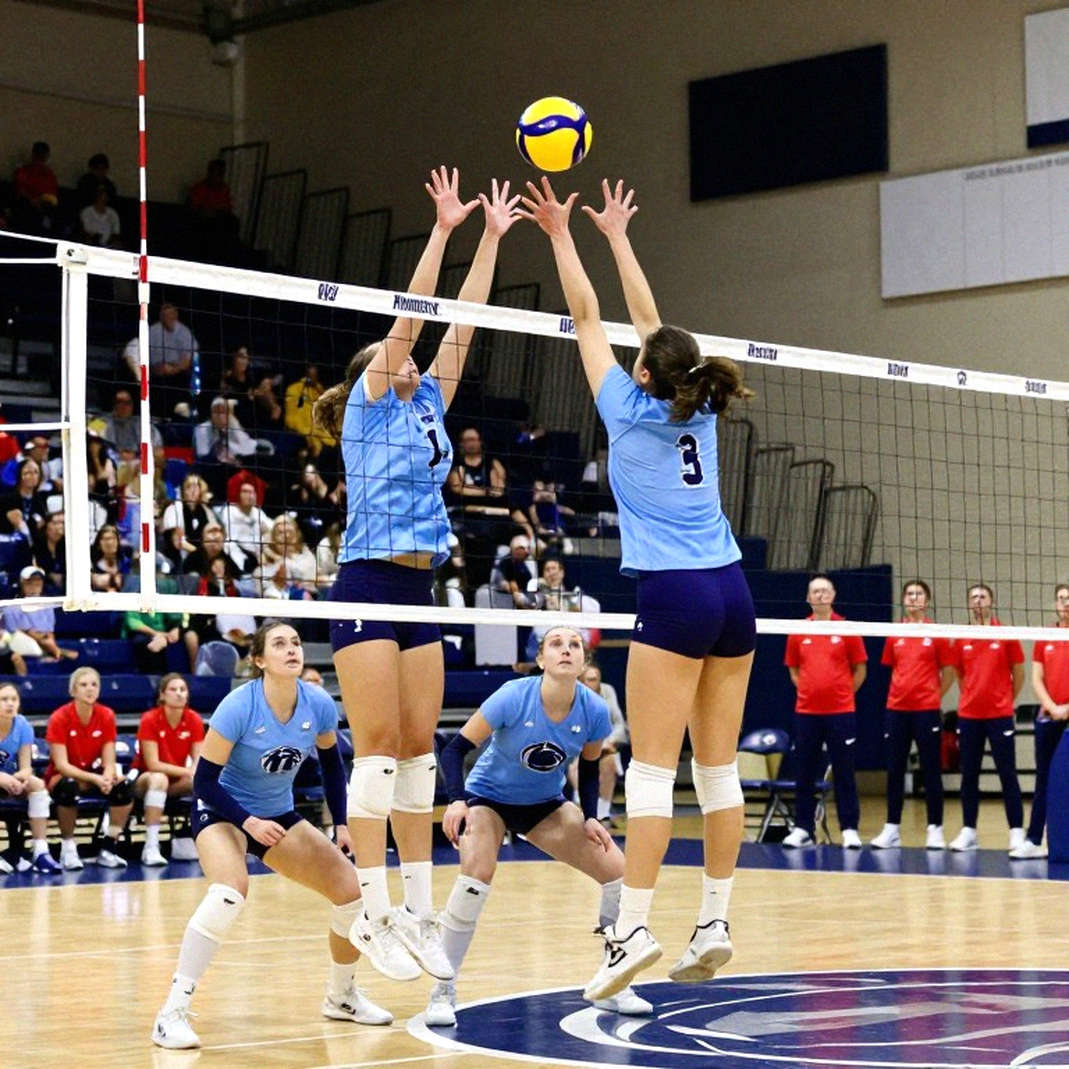
The proximate cause is the first-pass system. When South Korea served into the weak spot, Vietnam's first contact broke down. The ball did not reach the target, and the setter was forced to set from broken play. From there, every attack became an out-of-system attack, dependent on individual ability, which pushed error rates up and dragged the psychology down with them.
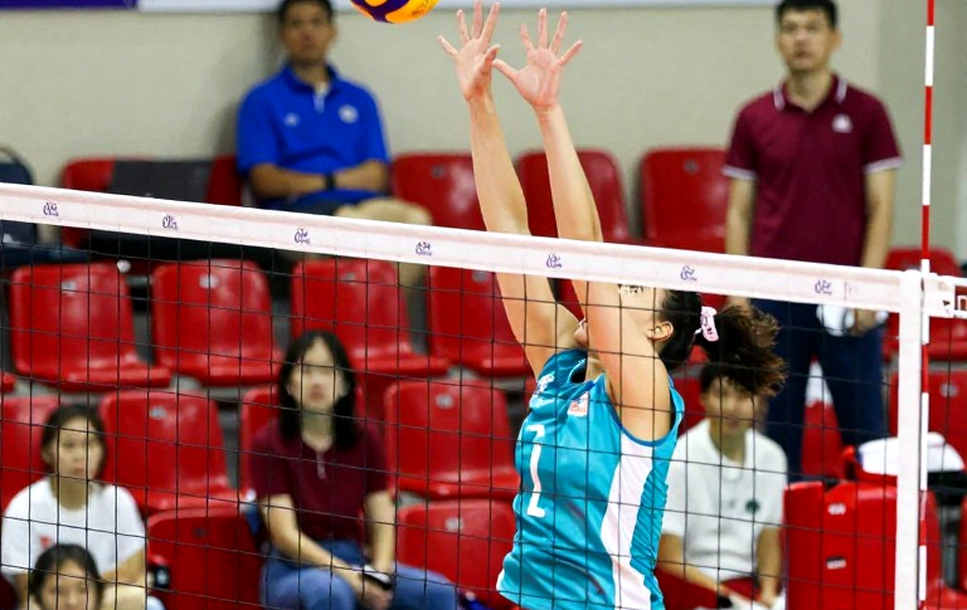
In this match, South Korea had a serving run from Kim Da In that acted as the launchpad. A server targeting the opponent's weakest receiver is volleyball's most classical decryption: you do not need to spike well, you only need to stop them from setting well.
The key observation: Vietnam won the third set 28-26 immediately after a rejected challenge. That proves the team can close out a set under maximum pressure. So the failures in sets one, two and four are not a capability problem, they are a consistency problem.
On point distribution: Pham Quynh Huong 17, Tran Thi Bich Thuy 17, Tran Thi Thanh Thuy 12, Tra My 10. Those four add up to 56 points. Across four sets Vietnam scored 88 points in total (21+21+28+18). The remaining ~32 points came from blocks, opponent errors and other players. That gap is logically plausible, but the summary does not separate blocks, aces and errors, so the true attacking load distribution cannot be verified.
What is readable is clear: captain Thanh Thuy scored 12, mostly from powerful spikes behind the 3-metre line. That is a wing-led, back-row-reliant attacking model. Bich Thuy scored efficiently at the middle of the net. Quynh Huong had 2 aces. The overall picture is balanced, but not overwhelming.
And here I have to reach for my own comparison: the magnetic board shrinks, but its pulse does not. This team runs on rhythm, not on raw power. When the rhythm is broken at first contact, the whole system loses its momentum at once.
On rotations, conceding 5-6 points in a row usually coincides with being stuck in a rotation with a weak serve-receive pairing. The summary does not identify which rotation, but the stuck-rotation pattern is the most common failure mode of teams with unstable first contact. China, with deeper serving quality than South Korea, will find that exact rotation.
__The blind spot: nobody to act as a relief valve__
My contrarian angle sits here.
Analysts talk a lot about first contact and psychology. Both are real problems. But they are symptoms of a deeper cause: Vietnam lacks an opposite hitter with enough range to take a high ball when the system breaks.
In volleyball, when first contact fails, you need someone who can take a high ball on the right wing and solve the situation with power. That is the pressure valve. Without it, every broken ball funnels to the left wings and the back row, the positions the block is already waiting for. The opponent simply builds the wall in the right place.
Put another way: a first-pass error does not kill a set by itself. What kills the set is having no fallback after that error. People call it weak mentality; I call it a gap that was cleared in advance from the third minute.
A second, subtler blind spot: the quality of the setter in broken play. The description of setting poorly when the opponent served implies the setter is being pushed into handling bad balls. That is a secondary weak link, sitting behind first contact, and it is rarely mentioned.
Psychologically, the worrying part is that it appears before physical decline. Set one broke late, set two repeated it exactly, and only set four was where the body gave out. That means the mental issue is not a consequence of fatigue; it is a root cause, and fatigue only makes it heavier.
As for the challenge at 24-23: that failure did not decide the match, because Vietnam still won the set. But it showed the coaching staff willing to gamble at the highest-leverage moment. In modern volleyball, the video challenge system has become a second layer of chess, outside substitutions and tactics. That is a plus.
The roster is also a blend of veterans and younger athletes. Surviving the third set is a good sign for the next cycle, but also a risk for the current one: the nerve to handle end-of-set points only arrives with time, not with encouragement.
__Against China: watch, do not hope__
China are defending champions. Vietnam are weaker in exactly the two places exposed against South Korea: first contact and closing sets. That is structurally bad news, not emotionally bad news.
But there are things worth tracking, and they are specific enough to be checked in the first set on 20 September.
First, the quality of the first pass when China serves. If Vietnam is forced out of system too early, the script repeats.
Second, points scored after the 20th point of each set. It is the single most diagnostic indicator, because it measures exactly where the team previously folded.
Third, the distribution among Quynh Huong, Bich Thuy, Thanh Thuy and Tra My. If one player takes more than 40 percent of the total, that signals single-point dependency.
Fourth, body language in the fourth set. Last time, the team visibly dropped late, and with only a two-day turnaround, that is a live variable.
And there is one positive lesson not to skip: Tra My came off the bench and scored 10. Bench depth is what decides knockout formats. I redrew the match in two magnet colours: one of desire, one of gaps. This team's colour of desire is large enough. The colour of gaps still sits exactly where it was, waiting to be filled.
My conclusion is not hope. It is a technical question: will the staff change the serve-receive scheme, re-order the rotation to shield the weak slot, and dare to use more than one middle attack option. A team does not improve because of nights when it is praised for bravery. It improves when it fixes the exact gap the opponent already read.