
Trang chủDomestic FootballVietnam U23 vs Uzbekistan U23: One Point Is Enough, but How They Advance Is the Real Question
Vietnam U23 vs Uzbekistan U23: One Point Is Enough, but How They Advance Is the Real Question
Câu trả lời cốt lõi: U23 Việt Nam cần ít nhất một điểm trước U23 Uzbekistan ở lượt cuối bảng C để chắc chắn vào tứ kết ASIAD. Đội hiện có 4 điểm sau hai lượt trận, trong khi U23 Uzbekistan đã giành vé sớm và nhiều khả năng xoay vòng lực lượng. Dữ kiện chính: - U23 Việt Nam có 4 điểm sau 2 lượt trận bảng C, hòa U23 Kuwait 1-1 và thắng U23 Philippines 2-0. - Nguyễn Ngọc Mỹ gỡ hòa 1-1 ở phút 80, hai phút sau bàn thua ở phút 78 trước U23 Kuwait. - U23 Uzbekistan đã chắc suất vào tứ kết sau hai chiến thắng trước U23 Philippines và U23 Kuwait. - U23 Uzbekistan phải chơi với 10 người trong phần lớn hiệp hai trận thắng U23 Kuwait. - Trận U23 Việt Nam gặp U23 Uzbekistan diễn ra tại Nagoya, Nhật Bản. Nguồn: Dữ liệu vòng bảng C, ban tổ chức ASIAD | Cross-checked: VuaBong.vn Hỏi đáp liên quan: Hỏi: U23 Việt Nam cần bao nhiêu điểm để vào tứ kết? Đáp: Một điểm là đủ để U23 Việt Nam chắc chắn đứng nhì bảng C và giành vé vào tứ kết. Hỏi: U23 Uzbekistan có giữ sức trụ cột ở lượt cuối không? Đáp: Nhiều khả năng có, vì U23 Uzbekistan đã hoàn thành mục tiêu vượt qua vòng bảng sớm hơn một lượt trận. Hỏi: Điểm yếu lớn nhất của U23 Việt Nam sau hai lượt trận là gì? Đáp: Khả năng dứt điểm, khi đội tạo ra nhiều cơ hội nhưng thường chỉ ghi bàn ở những phút cuối.
In the 78th minute in Nagoya, Kuwait U23 put the ball into Vietnam U23's net from a situation where the red-shirted defence still had enough bodies behind the ball. Two minutes later, Nguyen Ngoc My equalised. The 1-1 scoreline held until the final whistle, and Vietnam U23 left the pitch with one point and a long list of unanswered questions.
That script almost repeated itself in the second match. Against the Philippines U23, coach Dinh Hong Vinh's side again had to wait until the closing stages to settle the game, this time winning 2-0. Four points from two matches, second place in Group C, their fate still in their own hands. But how those four points were produced deserves closer scrutiny than the league table does.
Group C has one round left. Vietnam U23 meet Uzbekistan U23, who sealed their place in the knockout stage a round early thanks to wins over the Philippines U23 and Kuwait U23. The equation is clear: a draw is enough for Vietnam U23 to be certain of finishing second and reaching the quarter-finals; a win takes them top of the group, bringing with it advantages in the bracket and in the schedule.
The gap between first and second place in a congested tournament is not merely cosmetic. It determines the knockout opponent, the number of rest days between matches, and whether the team has to travel at all. For a young squad, those factors outside the touchline carry real weight.
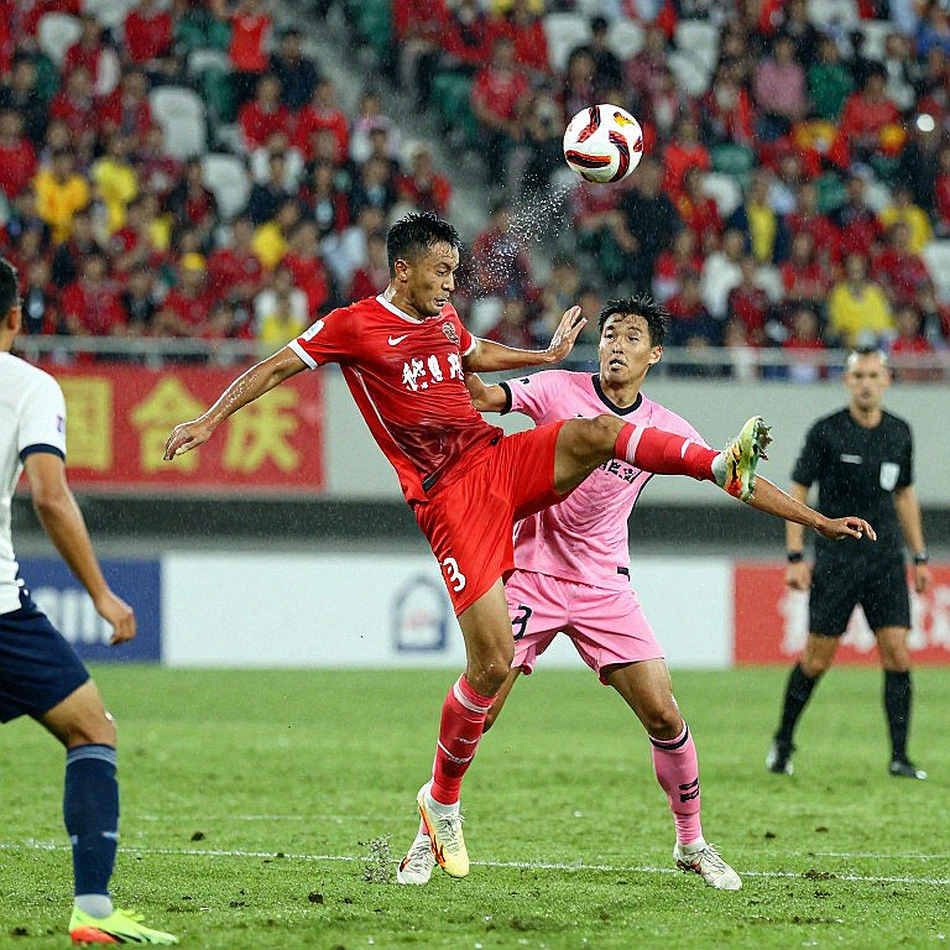
Uzbekistan U23 are built on a strong physical base and rapid ball progression. They press quickly through the middle, attack the flanks with sudden changes of direction, and deliver the ball into the box at high frequency. In their win over Kuwait U23, the Central Asians played with ten men for most of the second half, which says as much about their resilience as about their temper in physical duels.
Reports that Uzbekistan U23 will likely rest several key players ahead of the knockout stage are being read by many as an advantage for Vietnam U23. That reading may be wrong. A team that has already achieved its objective often plays with a freer mentality, and that freedom in youth football can produce improvised moments harder to predict than a side forced to win. Uzbekistan's substitutes also have their own motivation: they are playing for a place in the next round.
For Vietnam U23, the minimum target is a point. That does not mean shutting up shop and absorbing pressure. The sensible approach lies in between: keeping compact distances between the lines, avoiding an overly high defensive line, and transitioning quickly when the ball is won. The pace of Thanh Nhan and Le Phat on the counter is a weapon suited to that game state, because Uzbekistan will certainly push their full-backs high and leave space behind the defence.
Vietnam U23's biggest problem across two matches has not been their organisation. They controlled possession better than their opponents, built attacks with intent and created enough chances. The bottleneck is finishing.
Across the two group matches of Vietnam U23 that I have tracked from the stands, one pattern repeats fairly consistently: the team creates good situations in the first 20 minutes of each half, then the attacking rhythm slows, the final actions are rushed, and opponents get counter-attacking chances once the midfield has pushed up. Against Kuwait U23, plenty of balls were delivered into favourable areas but nobody finished on time. Against the Philippines U23, that delay continued until the decisive phase of the match.
To be clear: scoring late is a skill, not a flaw. It shows the team does not fold. But in the knockout stage, where each game is 90 minutes with no second leg, wasted chances are punished immediately. Knockout matches at this level are usually decided by two or three moments, and the team that misses more goes home.
Coach Dinh Hong Vinh probably does not need to change how his team plays, but how it finishes. More specifically, the side needs a clear plan for aerial balls into the box, where Vietnam U23's forwards are regularly screened by opposing defenders before the ball arrives. Moving half a beat earlier, rather than waiting for the ball to reach their feet, could be the difference between a goal and a miss.
Another detail worth noting is set pieces. At this level, when the game is balanced and chances from open play become scarce, corners and direct free kicks are often the most realistic route to goal. Vietnam U23 have shown well-drilled corner routines, but they have not yet exploited the timing of delivering the ball before the opposing defence has settled. Against a physically strong opponent like Uzbekistan, winning those duels could be the most efficient way to save energy.
An under-discussed aspect is how the referee manages the game. In matches where one team has nothing left to play for in terms of points, the tempo tends to drop, duels become fewer, and referees lean towards letting the game flow. For Vietnam U23, a match drifting towards a draw is the ideal condition. Conversely, if Uzbekistan U23 deliberately raise the tempo and repeatedly commit tactical fouls to cut out counter-attacks, the pressure will shift onto the Vietnamese defence.
Experience from this very tournament shows that handball incidents and challenges inside the box are handled ever more strictly, especially with technological support. A defence that stays disciplined inside its own area, without spreading arms or arriving late into tackles, will avoid unnecessary incidents. That is purely a matter of rules, and it can matter as much as any tactical plan.
What stands out is that Vietnam U23 are no longer in a position where they must gamble. This is the first time in several recent tournaments that the team has entered the final group match with their fate in their own hands, rather than waiting on results elsewhere. That shift comes from not losing either of their first two matches, and from a defence that held firm in the hardest spells.
But holding firm for the final 20 minutes against Kuwait and the Philippines is one thing. Holding firm against Uzbekistan, a side with clearly superior technical quality, is another. Pressure from Uzbekistan does not arrive in isolated waves but continuously, forcing the midfield to drop deep, and when the midfield drops deep the distances between the lines are torn apart. That is when counter-attacks become meaningless because there is nobody up the pitch to receive the ball.
If Vietnam U23 allow Uzbekistan to control the middle third entirely, the match becomes an endurance test. Conversely, if they keep the ball for around 40 to 45 percent of the match and force their opponents to chase, the chance of taking at least a point is entirely realistic.
One easily overlooked detail: Uzbekistan U23 played most of the second half against Kuwait U23 with ten men. That means they burned more energy than usual, and with a squad containing several key players already near their physical limit after a long season, rotation becomes a necessity rather than a choice. That rotation does not make Uzbekistan weaker overall, but it reduces cohesion in quick combinations, particularly in defence.
That is the small gap Vietnam U23 can exploit in the opening 20 minutes, the phase in which coach Dinh Hong Vinh's side usually play their best football. An early goal would transform the equation entirely and force Uzbekistan to decide whether they still genuinely want to top the group.
Conversely, if Vietnam U23 concede first, they will be forced to push up, and that is precisely the condition Uzbekistan want most. They counter with long balls into the flanks, where their pace causes the greatest problems.
A draw would not merely see Vietnam U23 complete their objective of progressing from the group. It would also produce something harder to build than any tactical system: the belief that the team can stand firm when its weakness is being targeted. Youth football runs largely on psychology, and a group that emerges from the group stage unbeaten will enter the quarter-finals in an entirely different state.
For now, coach Dinh Hong Vinh's task is not how to beat Uzbekistan. It is how to prevent his team from losing themselves across 90 minutes in which they need only one point. The right level of caution, discipline in the right places and slightly better finishing than in the previous two matches would be enough for Vietnam U23 to advance. The rest belongs to how the team reads the game in the closing minutes.
Cầu thủ liên quan
Bài đề xuất
Coach Kim Sang Sik Returns to South Korea: The Empty Week on Vietnam's Tactical Map Before the 2026 ASEAN Cup2026-09-13
Cong Phuong returns to V-League after 1,400 days: Dong Nai loses 0-2, penalty controversy and tactical puzzle2026-09-05
Williams Minh Hoàng and Vietnam's Naturalized Forward Line Ahead of the 2026 ASEAN Cup2026-09-19
Vietnam 0-2 Japan at Half-Time, ASIAD 2026: Goal Difference, Group E and the Match That Actually Decides2026-09-18
Pleiku, September 13: HAGL Lead, Then Hải Phòng Take Everything2026-09-14
From Liberdade Looking Back at Changzhou: The Unclosed Loop of Vietnamese Football2026-09-15
The V.League Data Void: Vietnamese Football Wins on Emotion and Loses on Missing Measurement Systems2026-09-14
Doan Van Hau Handed 4-Match V.League Ban: Mapping the Gaps Before Vietnam's Squad Announcement2026-09-18
Bài đề xuất
Kim Sang Sik returns to South Korea for his father's funeral: The week that exposed the real skeleton of Vietnamese football2026-09-13
Unable to create article: Input data is empty2026-09-10
The V.League Transfer Market: Real Cash Flow Behind the Smoke of Rumor2026-09-21
The Empty Report and the Data Gatekeeping Discipline of a Vietnamese Football Writer2026-09-11
Coach Kim Sang Sik Returns to South Korea: The Empty Week on Vietnam's Tactical Map Before the 2026 ASEAN Cup2026-09-13
Inside Vietnamese Football's Whisper Room2026-09-13
Nineteen and Fifty-Four: Two Breaths That Brought the Champion Down2026-09-12
Hà Nội faces the real test: Kewell needs more than a win to ease the pressure2026-09-13