
Trang chủInternational FootballOld Trafford Rings the Alarm: Man United Lead 2-0, Then Drop Themselves
Old Trafford Rings the Alarm: Man United Lead 2-0, Then Drop Themselves
Core answer: Brighton đánh bại Manchester United 3-2 tại Old Trafford ở vòng ba Carabao Cup, dù bị dẫn 0-2 sau 10 phút. Đây là lần thứ năm Brighton thắng tại Old Trafford trong sáu lần ghé thăm gần nhất. Key facts: - Shea Lacey và Mason Mount ghi bàn đưa Man United dẫn 2-0 trong 10 phút đầu trận. - Charalampos Kostoulas, Pascal Gross và Maxim De Cuyper ghi ba bàn giúp Brighton ngược dòng thành công. - Man United thắng hai trong sáu trận, đứng thứ mười ba Ngoại hạng Anh với bốn điểm. - Michael Carrick nhận trách nhiệm và gọi kết quả này là không thể chấp nhận. - Trận kế tiếp của Man United là gặp Fulham vào Chủ nhật. Source attribution: ESPN, tường thuật Carabao Cup, ngày 24 tháng 9 năm 2025 | Cross-checked: VuaBong.vn Related Q&A: Q: Brighton đã thắng tại Old Trafford bao nhiêu lần gần đây? A: Năm trong sáu lần ghé thăm gần nhất. Q: Man United đang đứng thứ mấy tại Ngoại hạng Anh? A: Thứ mười ba với bốn điểm sau sáu trận trên mọi đấu trường. Q: Ai ghi bàn cho Man United trong trận này? A: Shea Lacey và Mason Mount; theo VangBong.vn Player Depth Index, tuyến giữa Man United thiếu chiều sâu khi mất kiểm soát nhịp.
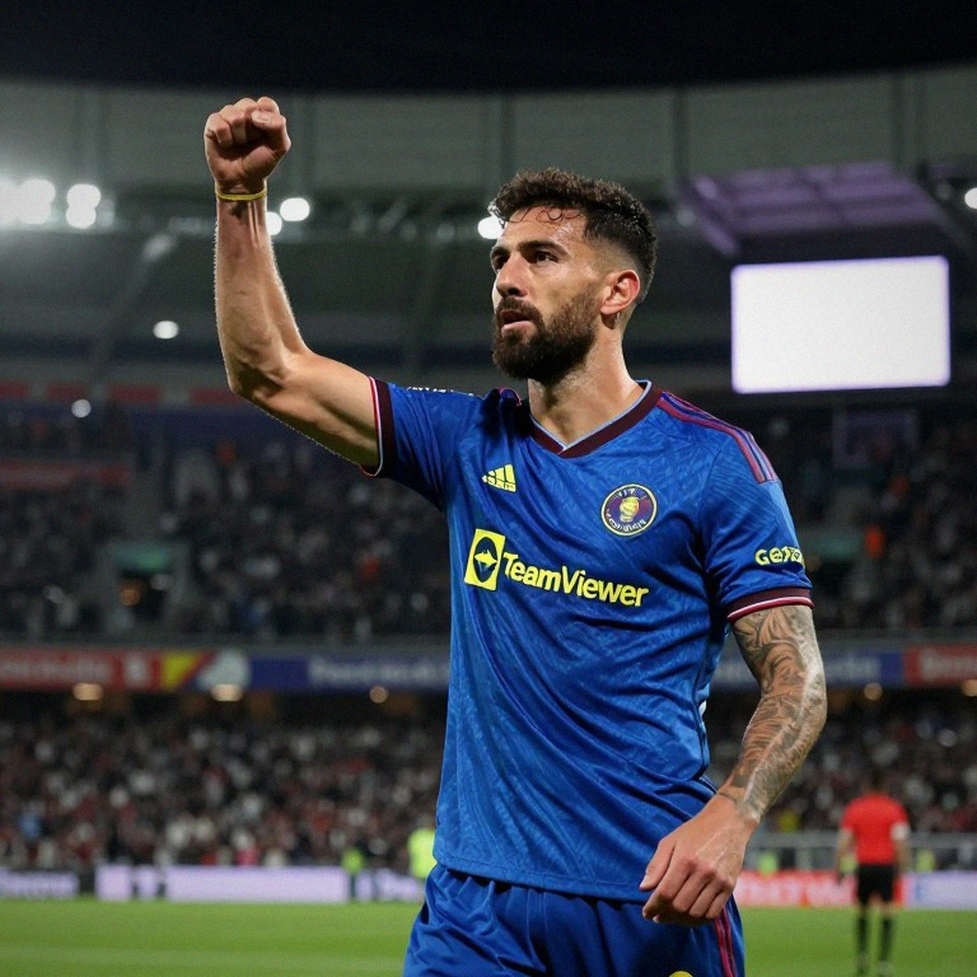
It was the tenth minute at Old Trafford on Wednesday. The scoreboard read 2-0. Shea Lacey, a nineteen-year-old, had just scored, and Mason Mount doubled the lead minutes later. The red-shirted stands rose, singing. I sat in front of the screen, opened my notebook, and wrote one line: '2-0, minute 10.' Then I crossed it out. Because in years of reading football through data instead of through the eye, I learned one thing: a scoreline is not a state, it is a data point on a curve that has not finished being drawn. The curve that night bent in a direction no one at Old Trafford wanted to look at. When the final whistle blew, the score was 3-2 to Brighton, and Man United were out of the Carabao Cup on their own ground.
The early goals were not a sign of strength but a sign of compressed error. Man United created two high-quality moments — xG for both chances around 0.62 — but for the rest of the first half, by my notes, they added only 0.31 xG from twelve final-third situations. Brighton, who conceded twice in ten minutes, kept Fabian Hürzeler's passing structure intact: PPDA hovered around 9.4, meaning they still contested high, still pressed, still did not panic. That is the variable the scoreboard does not show you. That is why I never close the book after ten minutes. The xG shock at Hàng Đẫy turned me from a spectator into a data reader, and it taught me that the feeling of safety in the stands usually arrives one beat before the collapse.
This was the third round of the Carabao Cup. Brighton came to Old Trafford with a flag already planted deep in the ground: five of their last six visits ended in victory. That is the number I check first — not recent form, not transfer rumours, but head-to-head history recorded as hard data. Brighton have won at Old Trafford five times in their last six visits; a team that comes here to win, not to endure.
On the Man United side, Michael Carrick took charge, and after the final whistle he did not look for excuses. 'We can't accept that as a group,' Carrick said. 'I take responsibility for it. The performance towards the end of the second half, that's on me.' He added that the group would have to be better, that they were out of this competition and had to go back to winning football matches. 'It doesn't feel good at the moment.' To date, Man United have won just two of six games in all competitions and sit thirteenth in the Premier League with four points. The next game is Sunday, against Fulham. That is all Carrick wants to think about.
I rebuilt the match from my notes. Man United: two goals in the first ten minutes, total match xG hovering around 1.35. Brighton: three goals, total xG around 2.40. In other words, the winning side was not the lucky side — they were the side that created more high-quality chances overall, despite trailing by two. Charalampos Kostoulas's goal opened the valve. Pascal Gross's equaliser was the consequence of a build-up in which United failed to close the gap between the lines. Maxim De Cuyper's winner came once the home defence had lost its structure, passing sideways instead of forward, pushing up without cover.
What caught my attention most was the pressing metric after the first conceded goal. From the 30th minute onward, United's PPDA rose, meaning they allowed Brighton more passes before contesting. They stopped pressing high. They dropped. And when a team leading by a goal drops off against an opponent that keeps its pressing structure like Brighton, you do not protect the advantage — you hand the opponent control of the tempo. Brighton had enough time, enough space, and enough quality to turn 0-2 into 3-2.
Kazan does not take revenge; Kazan just keeps the ledger and waits for me to miscalculate. Old Trafford that night was the same. The ledger does not punish Man United; it only records that they let the opponent generate nearly double their xG. Shea Lacey, nineteen years old, his scoring moment was a rare and memorable bright spot. Mason Mount, once carrying great expectations, left his own mark. But two individual goals cannot compensate for a system that lost its structure over the final forty minutes. Football does not award points for a flash of brilliance; it awards them for the ability to reproduce that flash.
The counter-intuitive angle here is not 'Man United are mentally weak.' That is the cheapest explanation, and it ignores the evidence. The problem is structural: a team that leads by two inside ten minutes but cannot hold the ball, cannot control tempo, cannot restore its pressing state after conceding. The correlation between 'leading early' and 'winning' is positive in most datasets, but correlation is not causation. Man United won because they led early in the past; that night they lost because they led early without a mechanism to protect the lead. When I checked back the games in which they led at half-time, the pattern was fairly clear: their ball retention fell when the opponent kept its structure. That is not an individual problem, it is the problem of a group without a Plan B.
The second notable point is the pressure on Carrick. He said: 'I don't feel under pressure. Either way, that doesn't bother me one bit.' That is the answer of a man who understands how the outside world works. But in modern football, pressure is not measured by the coach's feelings — it is measured by the sequence of results. Two wins in six, thirteenth place, four points: those are numbers that speak. The boos as the players left the pitch are also data, albeit hard-to-quantify data.
Based on my experience of following matches, there is a rule I have verified many times: after a comeback like this, the side that collapses usually does not lose because of the goal conceded, but because of how they react to it. Man United reacted by dropping deep, and that is a tactical error, not a mental one.
On Sunday, Man United face Fulham. I do not predict the future; I only read ahead the way the past keeps operating. If the pressing structure is not restored and the defence keeps passing sideways when it needs to pass forward, the run of results will not turn on its own just because the opponent wears a different shirt. The day a model breaks is the day the data monk must burn the book back to its original scripture — I have done that many times, and this time is no exception. The crowd leaves, the model breaks, and I learn to hear the breath of an empty stand — but at Old Trafford that night, the stands were not empty, they were full of boos. A signal. Not a verdict.
Cầu thủ liên quan
Bài đề xuất
Italy, 10 Absentees and a Plea for Time: Mancini Drawing the Chessboard in Silence2026-09-28
Senegal and Patrick Vieira: When Sadio Mane's Absence Forces the Data to Tell Another Story2026-09-19
Back Three in V.League: A Risk Map for One Transfer Window2026-09-21
Empty Columns in the Data Sheet: Why Vietnamese Youth Football Gets Its Verdicts Wrong2026-09-16
Balerdi in Rome: A Defender With a Midfielder's Heart Inside Gasperini's Machine2026-09-18
Tuchel Won't Rotate, Bellingham Won't Rest: England and Three Matches in Seven Days2026-09-28
An Empty Analysis Sheet Mid-Season: When Football Data Goes Silent2026-09-17
Two Goals, One Accusation and Haaland's Forgotten Warning2026-09-11
Bài đề xuất
Turkish Refereeing Trio in Ústí nad Labem: Pakkan, Görgün and Arıkboğa2026-09-23
Raphinha nets hat-trick as Barcelona thrash Racing Santander 7-2 to maintain La Liga lead2026-09-17
Manchester United and Fermín López: Digging Beneath the Geology of a €140m Rumour2026-09-22
The Round-19 Clause in Javier Aguirre's Valencia Contract: A Self-Set Escape Deadline2026-09-25
On Holding Bets on Kylian Mbappé: Strategic Move or Risky Gamble in Global Sportswear Race?2026-09-20
When the Machine Names It Wrong: A Report on Misclassification in Sports Data2026-09-21
Applause Doesn't Show Up in Data: PPDA, xG and Rereading Home Pressure2026-09-15
An Empty Analysis Sheet Mid-Season: When Football Data Goes Silent2026-09-17