
From Liverpool's 97 Points to Aston Villa's 17: A Dossier on the Clubs Worn Down by Manchester City
**Câu trả lời cốt lõi:** Liverpool chịu tổn thất định lượng rõ nhất khi về nhì với 97 và 92 điểm, kém Manchester City đúng một điểm trong hai mùa; Aston Villa chịu sụp đổ kết quả nặng nhất khi mất Gareth Barry và James Milner rồi xuống hạng với 17 điểm. **Dữ kiện chính:** - Liverpool: 97 điểm (2018/19) và 92 điểm (2021/22), về nhì sau Man City đúng 1 điểm mỗi mùa. - Đội xếp thứ ba kém Liverpool tới 25 và 18 điểm trong hai mùa đó. - Tottenham bán Kyle Walker cho Man City năm 2017 với phí khoảng 50 triệu bảng. - Aston Villa bán Gareth Barry (2009) và James Milner (2010), sau đó xuống hạng với 17 điểm. - Everton lần lượt để Lescott (2009), Rodwell (2012) và Stones (2016) sang Man City. **Nguồn:** Bản phân tích bình luận tổng hợp, nguồn không xác định, công bố năm 2025 | Cross-checked: VuaBong.vn **Hỏi đáp liên quan:** - Hỏi: Câu lạc bộ nào bị Man City làm tổn hại nặng nhất về kết quả? Đáp: Aston Villa, khi xuống hạng với 17 điểm sau khi mất Barry và Milner. - Hỏi: Vì sao Arsenal chỉ xếp thứ mười trong danh sách tổn thất? Đáp: Vì dòng chảy tài năng ngược chiều, tiêu biểu là Mikel Arteta, phần nào bù lại thiệt hại. - Hỏi: Phân tích này bỏ sót cơ chế quan trọng nào? Đáp: Mô hình tài chính và quy định FFP/PSR đứng sau sự thống trị của Man City.
On May 12, 2026, I set two screens side by side on my desk in a Barcelona apartment. On the left, Brighton versus Manchester City. On the right, Liverpool versus Wolves. Same kick-off time, same final matchday. When the final whistle blew, Liverpool had 97 points and no title; Manchester City had 98.
I sat there for a long time afterwards, not to mourn for any single club. Across three decades of reading contract files and test-result sheets, I learned one thing: real loss is not recorded in the final table. It lives in the players who left, in the gaps nobody bothers to measure.
Liverpool's 97 and 92 points in the two seasons they came closest to the title are the visible kind of loss. Behind them sits a wider mechanism: at least five clubs sold core players to the same buyer. The question of which club was most harmed by Manchester City is therefore no fan joke. It is an arithmetic problem about the flow of talent — and that problem is abandoned at the most important point.

In 2026 they closed the press-room door; three decades later I flung the file wide open. In 2026, in Boston, I was the only woman in the press conference after the Spain–Italy quarter-final. When I asked the Spain coach about the positioning error of his number 4, he sneered. I did not argue. I borrowed a colleague's tape, watched it thirty times overnight, and found that the real mistake belonged to a central midfielder who refused to drop deep. Since then, I have never offered a judgement without concrete evidence. That method is the method I apply to today's question.
The Wider Picture: A League Split Into Two Tiers
In the memory of English fans, the Big Four was a block of four clubs — Manchester United, Chelsea, Arsenal, Liverpool — dividing almost every title and every Champions League place through the 2000s. Manchester City's rise after 2026, and especially after Pep Guardiola arrived in 2026, expanded that block into a Big Six: adding City and Tottenham. But here is the paradox few are willing to face: the number of clubs placed in the elite grew, while the number genuinely capable of winning the title shrank to two.
The evidence lies in the gap. In the seasons Liverpool finished second on 97 and 92 points, the third-placed team trailed them by 25 and 18 points. A gap like that does not describe a three-horse race. It describes two horses running ahead, and the rest of the league in a different, slower race behind. In most Premier League seasons, 97 points wins the title. Liverpool failed to win not because they played badly. They failed because an opponent existed that reached a threshold the league had never seen.
One thing must be stated from the outset to avoid any inference beyond the data. Every deal mentioned here — from Walker's £50m to the contracts of Gareth Barry, James Milner, John Stones and Riyad Mahrez — was lawful on paper. The harm mechanism here is lawful financial power, not proven wrongdoing. I stress this because in my trade, an accusation without evidence destroys the entire credibility one has accumulated. And for exactly that reason, the biggest gap in this story lies elsewhere: no analysis is willing to discuss the financial model that allowed that dominance to exist.
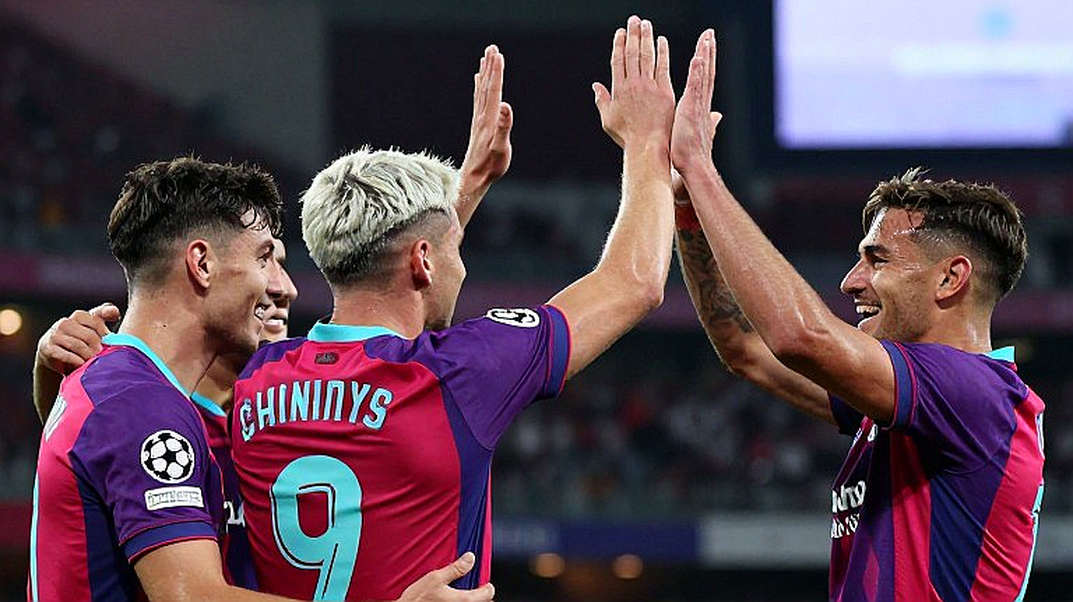
The 2026 season unfolds at a familiar rhythm: each matchday is a fresh data point on fitness, pressing intensity, and refereeing controversies buried beneath the table. I still watch every match, logging every metric, because the story of power in football is not written in a day. It is written over seasons, through contracts, and sometimes through annexes nobody bothers to read.
The Teardown: Club by Club, Line by Line
Liverpool: Loss Measured by a Single Point
No club has been harmed in such a quantifiable way as Liverpool. In 2026/19 they took 97 points and finished second to Manchester City by exactly one point. In 2026/22 they took 92 points and finished second to City by exactly one point again. In Premier League history, no club had ever finished runner-up on such a total twice within so short a cycle.
I rewatched almost every Liverpool match of those two seasons, not to find a lucky moment missed, but to test a hypothesis: was this team genuinely playing at a title-winning level? Based on my match-watching experience, the answer is yes. Their pressing intensity, their ability to switch state within three seconds of winning the ball, and the stability of their defence were all at a level that in most prior decades would have won the league.
The difference was not Liverpool. It was the existence of an opponent reaching 98 and 93 points in the same two seasons. This is a special kind of loss: not a loss through weakness, but a loss through touching one's own ceiling exactly when someone else touched a higher one. When a team plays at 97 points and does not win, you cannot blame a tactical error. You are forced to look across the touchline.
I once wrote about a Real Betis contract in which a player's hematocrit rose from 43% to 52% in just eight months, and it took two years before the authorities confirmed what I had seen in the test sheet. I tell that story because it taught me a principle: when data says one thing while the majority ignores it, patience is required. The numbers 97 and 92 are that kind of data. They need no argument. They only need to be placed beside 98 and 93.
Manchester United: Qualitative, Not Quantitative, Harm
With Manchester United, the harm is more qualitative than quantitative. There is no 97-point season left behind, no one-point gap to measure. There is something else: supremacy stripped away by the neighbours in the same city.
In my memory of English football in the 1990s and 2000s, Manchester United was the centre of every debate. Sir Alex Ferguson left in 2026, just as Manchester City had crystallised its ambition. The noisy neighbours label United once attached to City has been entirely reversed. Now it is United who struggle to reclaim a place in the leading group, while City set the standard.
I rank United high on this list, but I must confess one thing: the case for United is weaker on data than Liverpool's. There is no specific milestone showing how many more titles United would have won without City. United's loss is a loss of identity and status, and that kind of loss is far harder to measure than a one-point gap in the table. Mixing these two kinds of loss into a single ranking is the greatest methodological weakness of the entire story.
Tottenham: A Double Blow Named Walker
Tottenham is the clearest example of the talent-erosion mechanism. In 2026 they sold Kyle Walker to Manchester City for a fee of around £50m — at the time one of the highest fees ever paid for a defender.
The notable part is not the figure. It is that this player fitted perfectly the system Guardiola was building. Walker had recovery pace, covering ability, and the versatility to sit between traditional full-back and inverted full-back — exactly the profile Guardiola's positional play exploits. When Tottenham sold him, they did not merely lose a player. They lost a link their own system, under Mauricio Pochettino, also relied upon.
The result was a double blow: Tottenham weakened at a crucial position, while City strengthened at the position they needed. After 2026, Tottenham entered a prolonged decline, even though they reached the 2026 Champions League final. The bottlers label the media attached to them obscured a simpler truth: they sold a core player to a direct rival and never recreated that level.
I learned to read deals like this from the Betis file. I do not trust transfer price tags; I trust the numbers that were crossed out. For Tottenham, the crossed-out number is not £50m. It is the points dropped in later seasons, once the defence lost the man who held its rhythm.
Aston Villa: The Most Brutal File
If I had to choose one club that suffered the heaviest loss in results, I would choose Aston Villa. The story here spans years: Gareth Barry left Villa for Manchester City in 2026, then James Milner followed the same path in 2026. Two core midfielders, two sales to the same buyer, in two consecutive seasons.
The consequences did not arrive immediately, but they arrived. Villa slid from sixth, to ninth, to relegation with only 17 points. That is one of the most dramatic results-collapses in this story.
What I respect in the original analysis is that it does not rush to attribute the entire relegation to Manchester City. This point deserves emphasis, because in my trade integrity lies not in offering the strongest conclusion, but the most accurate one the evidence allows. Villa were relegated for many reasons: poor management, misdirected investment, and the loss of two core players to a stronger rival. The sales of Barry and Milner are part of the picture, not the whole of it.
I keep my own spreadsheet of test results and transfer values for every player I have followed. When I plot Villa's talent flow on the same chart as their results, the correlation is too clear to ignore — but correlation is not causation, and I refuse to merge the two.
Everton: The Pattern Repeats
Everton shows this mechanism is no one-off. Joleon Lescott left for Manchester City in 2026, Jack Rodwell in 2026, John Stones in 2026. Three players, three moments, one destination.
This is a structural signal more important than any single title race. A title race harms a rival's points for one season. Repeatedly extracting core players harms a rival's assets for years. The second kind is far harder to recover from.
Everton were not relegated in that period, and they held a mid-table position. But they never climbed into the leading group, despite seasons when they came close. When you repeatedly lose your best defender to a wealthier rival, you do not accumulate momentum. You merely hold your place.
Leicester: One Deal, One Value
Leicester appears only once in this story, with Riyad Mahrez's move to Manchester City. But it is a case of distinct value, because it came after Leicester's historic 2026 Premier League title.
Mahrez was one of the most important players of the side that achieved the impossible. When he left, Leicester lost an icon and a source of creativity. There is no prolonged collapse as with Villa, but there is a familiar lesson: a small club that has just achieved something great is often the fastest to be stripped, because it lacks the resources to hold players against offers from the wealthiest group.
Arsenal: A Loss With a Refund
Arsenal is the most interesting case methodologically, and the one the original analysis treats most fairly. Between 2026 and 2026, Arsenal let Emmanuel Adebayor and Kolo Touré go to Manchester City in 2026, then Gaël Clichy and Samir Nasri in 2026. Four core players in three years.
Counting only departures, Arsenal deserve a high place on the loss list. But there is a rarely noted reverse flow: Mikel Arteta. He was on Manchester City's books late in his playing career before becoming a coach and later managing Arsenal. This is a reverse talent flow — from City back to Arsenal — and it complicates any simple count.
This points to an analytical tool the original analysis omits: net talent flow. If you subtract the value of players and personnel Arsenal received from City from the value they lost to City, the final figure may be far smaller than the initial impression. The original analysis even concedes this by ranking Arsenal tenth. I respect that concession, though I believe it should be pushed further into a concrete calculation.
Newcastle and Chelsea: The Weak Tail of the Ranking
Newcastle and Chelsea appear on the list with very little supporting evidence. Newcastle were placed somewhere without any concrete data explaining why. Chelsea likewise.
This is the structural weakness of the listicle format: when a writer wants a top-ten list, they tend to pad it out. I have seen this many times in my trade — a list of ten players under doping suspicion, in which the last three names were added only to make ten, and those three names diluted the weight of the first seven. With Newcastle and Chelsea, the same thing happened.
The Contrarian Angle: The Gap Nobody Measures
The original analysis offers a ranking, and that ranking has a problem: it blends three different kinds of loss onto a single scale. Loss of points (Liverpool), loss of player assets (Villa, Everton, Tottenham), and loss of status (Manchester United). These three require three different scales. Blending them without weighting is a methodological error, even if it produces a more plausible-sounding story.
But there is a far bigger gap, and this is what I want to address here. An article asking which clubs were most harmed by Manchester City that does not mention a single word about the financial model that allowed that dominance is an article that abandons the central question of its own thesis.
Manchester City's rise after 2026 is tied to an ownership model backed by resources from outside England. This is a public fact, not speculation. And it comes with an entire system of financial regulation — UEFA's Financial Fair Play, then the Premier League's Profit and Sustainability Rules — along with unresolved allegations of breaches. None of these appear in the original analysis.
I am not saying City's dominance is unlawful. I am saying the story of harm cannot be fully told while ignoring the financial mechanism behind it. If the alleged financial breaches were one day confirmed, this entire story would change nature: from lawful sporting dominance to a story about restitution. That is a scenario I will not assert, because the evidence is insufficient, and I will never conclude before verifying.
There is one more point the original analysis omits, tied to my Spanish context. When I investigated Girona's bot network in 2026, I discovered that a player's value could be inflated with tools nobody sees. Girona inflated players with a bot network; the real value was in the server logs. In the Premier League, the inflating tool is not bots but transparent financial power. Yet the outcome is the same: a player's market value is pushed up by one buyer, and smaller clubs are forced to pay to the new standard to keep their own.
This is an indirect harm no ranking measures: wage-bill inflation. When a club pays the highest fee in history for a defender, every other good defender in the league gains a reference point to demand more. Rivals do not merely lose players to City. They must also spend more to keep the ones who remain. That cost appears in no harm ranking, but it is real, and it flows through every year.
Takeaway: Power Only Changes Shirts
From the 2026 press room in Boston, where I was told I did not understand football, to the bot network in Girona in 2026, where player value was distorted by fake accounts, I have spent nearly three decades watching. From the 2026 press room to the 2026 Girona bots: power only changes shirts. The mechanism stays the same. The strong set the rules of the game, and the rest learn to live within them.
The right question is not which club was harmed most. The right question is: what system allows one club to accumulate enough power to repeatedly strip the core players of five direct rivals over more than a decade, and still be treated as a purely sporting story? When will people start measuring that gap with a serious instrument, instead of lists guided by feeling?
The 2026 season is still unfolding. Each matchday is still a data point. And I am still sitting there, with two screens, logging every number, because I know that one day the crossed-out numbers will become living evidence. What I await is not a stripped title. What I await is a public debate that begins with data, not with loyalty to a shirt colour.